
 54 Hope St, Brunswick VIC 3056
 0406 154 886
 Email Us

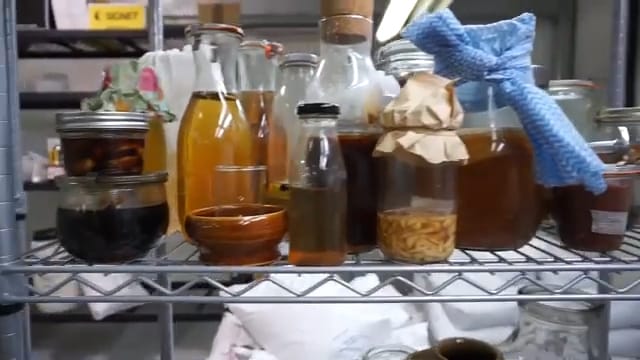
For Australian kombucha brewers like The Good Brew Company, the answer lies not in marketing language but in microbiology. It’s about how a living culture transforms tea into something that continues to evolve long after it leaves the fermenter.
Why kombucha suits how Australians drink now
Australians are moving away from sugar-sweetened drinks. The ABS reports a long-running shift toward lower sugar choices, with intense-sweetened beverages rising from 29.6% of volume in 2018–19 to 36.2% in 2023–24. That signals demand for flavour and fizz without the sugar hit. Australian Bureau of Statistics
Public health programs in Victoria have backed that change for years. VicHealth’s H30 initiative (vichealth.vic.gov.au) encourages swapping sugary drinks for water. Councils funded under the Water in Sport program reduced sugary drink availability in venues and kiosks. These signals shape local habits and help alternatives like living kombucha find a place in everyday life.

Why Pasteurisation Changes More Than Safety
Pasteurisation has a clear purpose: it reduces microbial risk. In milk or juice production, this is a non-negotiable step for safety. But in kombucha, acidity is the natural safeguard. According to the Food Standards Australia New Zealand (FSANZ) Code (Standard 2.6.2), kombucha’s typical pH of 2.5–3.5 makes it an unfavourable environment for pathogens. In other words, when properly brewed, the drink’s own acidity protects it.
For this reason, many small-scale Australian brewers choose to keep their kombucha raw. It’s a choice that requires precise fermentation control and refrigeration, not heat. The acidity, organic acids, and live microbes form a self-balancing system — as long as the drink stays cold.
Research in Food Microbiology (2020) confirms that refrigeration slows microbial activity, preserving both safety and flavour. Without cold storage, however, yeast can continue to ferment, subtly changing the taste and carbonation, and potentially nudging up alcohol levels over time. This is why brands like Good Brew maintain a strict cold chain from fermenter to fridge.
Filtering: The Fine Line Between Clarity and Character
Filtering kombucha removes sediment, yeast strands, and microscopic particles. While some large producers filter heavily to achieve a clear, uniform look, others prefer to leave it slightly cloudy — evidence of its living state.
Filtration can strip out trace fibres and cells that give raw kombucha its natural complexity. For brewers focused on authenticity, this “unfiltered” approach means the drink may evolve slightly in bottle, with flavour deepening as organic acids continue to develop.
For consumers, the difference is easy to spot: pasteurised, filtered kombucha tends to look crystal clear, while raw kombucha may have gentle haze, sediment, or even a thin SCOBY film forming at the surface. These are normal signs of life, not spoilage.
What the Science Says About “Live” Kombucha
There’s growing evidence that unpasteurised kombucha retains bioactive compounds lost in heat-treated versions.
Raw kombucha preserves higher levels of polyphenols, antioxidants, and gluconic acid, all naturally produced during fermentation. While these compounds contribute to flavour and aroma, they also play roles in the drink’s chemical stability and potential health properties.
That said, “live” doesn’t automatically mean “healthier.” Not all microorganisms in kombucha are recognised as probiotics under the World Health Organization’s definition — which requires proven benefits in human trials. Still, the presence of a diverse microbial ecosystem suggests raw kombucha offers more than taste alone: it’s a biologically dynamic food, closer to yoghurt or kefir than to a flavoured soda.
Storage, Shelf Life, and Responsibility
Choosing raw means accepting that kombucha is alive — and living foods behave differently over time. Kept refrigerated, it remains stable for months. Left warm, it may continue fermenting, producing extra carbon dioxide and minor alcohol increases.
For this reason, responsible raw brewers are transparent about handling: bottles must be kept cold, stored upright, and consumed within recommended dates. It’s a balance between natural fermentation and food safety — one achieved not through additives, but through care.
Why Good Brew Chooses to Stay Raw
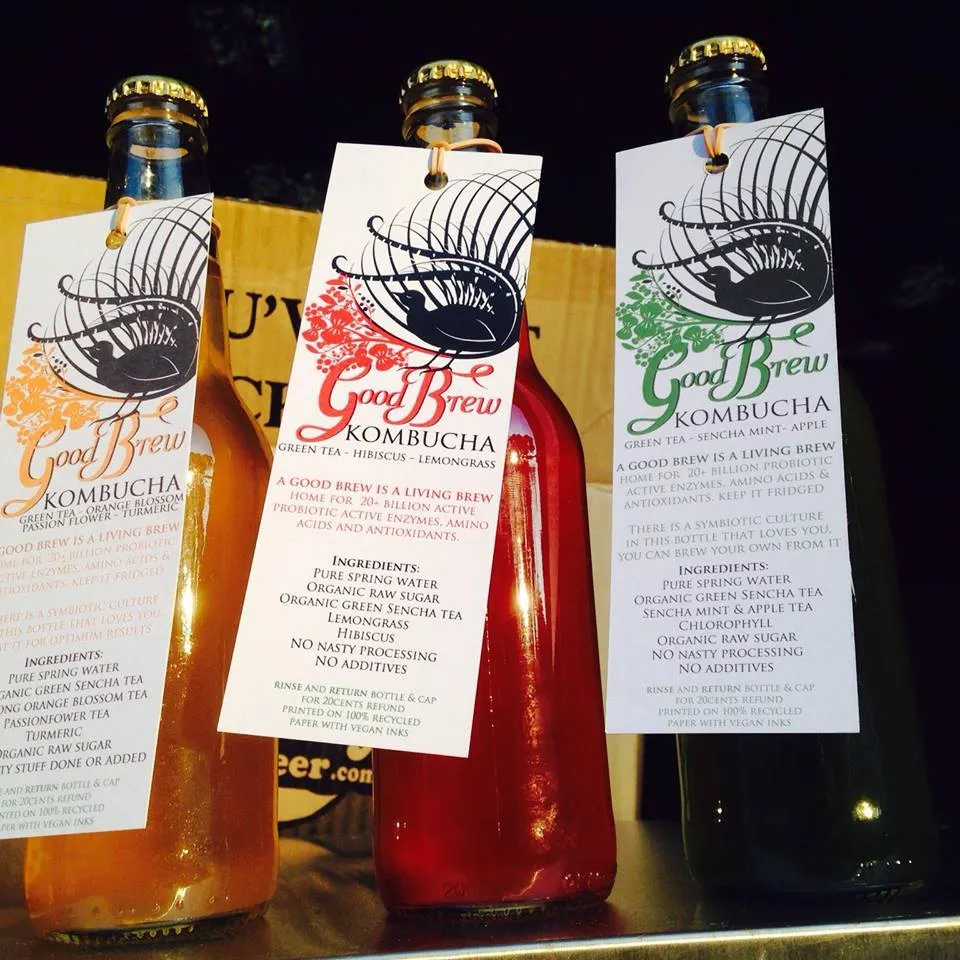
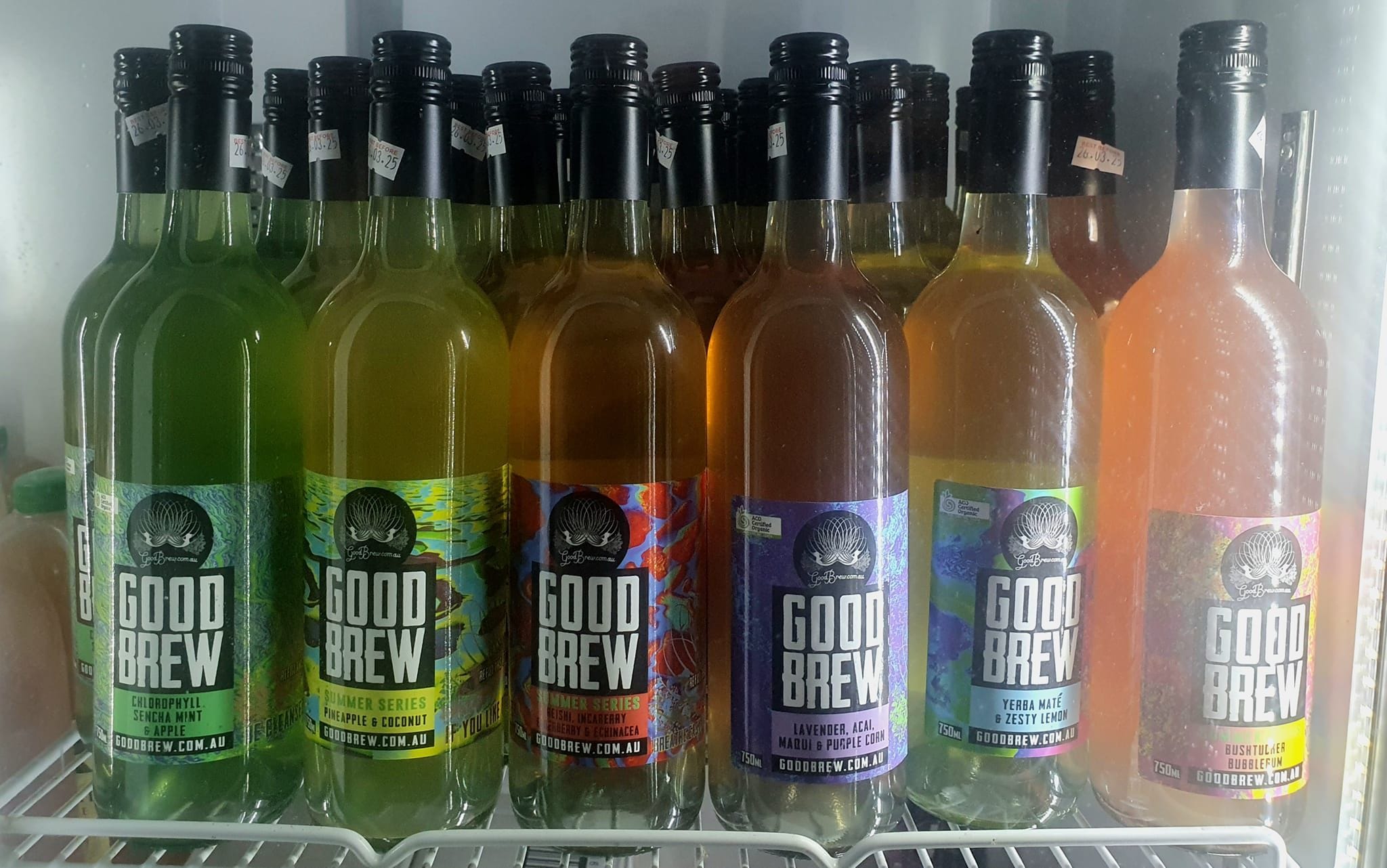
Good Brew’s philosophy is simple: kombucha should remain as close to its natural state as possible. Every batch is brewed with organic tea, fermented under controlled conditions, and bottled without pasteurisation or heavy filtration.
This approach allows the beverage to retain its living qualities — flavour depth, aroma, and the subtle effervescence that only natural fermentation can create. It’s a commitment that prioritises authenticity over uniformity, ensuring that what’s in the bottle reflects what happens in the fermenter.
How Raw Brewing Shapes the Market
As kombucha’s popularity continues to rise, Australia’s beverage industry is quietly splitting into two camps: those who heat-treat for consistency and those who keep their cultures alive. Both approaches have a place — one built for scale, the other for depth.
What’s striking is that consumers are now asking questions once confined to brewers and microbiologists. They want to know how their drinks are made, how they’re stored, and whether they’re still “alive” by the time they reach the fridge. It’s the kind of curiosity that used to belong to coffee or craft beer — and now, it’s shaping how kombucha itself evolves.
For small producers working with unpasteurised fermentation, that curiosity is both a challenge and an opportunity. It demands precision and transparency, but it also gives them room to tell a story about process rather than packaging.
Because in the end, “raw” isn’t just a label. It’s a way of saying the drink in your hand is still changing — quietly, naturally, and very much alive.
Further Reading
To find out more about studies that show the scientific health benefits of Kombucha, visit our Kombucha Research page.