
 54 Hope St, Brunswick VIC 3056
 0406 154 886
 Email Us

Plenty of home-brewed kombucha tastes flat. Not bad, just ordinary. If yours pours without a hiss, tastes a bit sharp, and doesn’t have the character of the bottles you buy, the problem isn’t your starter culture. It’s what happens, or doesn’t happen, after the first ferment finishes.
That second stage is where kombucha becomes fizzy, properly flavoured, and balanced. Skip it or rush it and you end up with something that’s technically kombucha but nothing like the real thing. At Good Brew in Brunswick, we’ve been brewing kombucha commercially since 2007, and we’ve taught hundreds of home brewers how to get past this exact point. Whether you’re learning how to prepare kombucha from scratch or trying to improve what you already make, the second ferment is almost always where the biggest gains come from.
Here’s what’s going on in that second stage, and how to do it well.
What happens during second fermentation
Second fermentation is the sealed, second-stage fermentation you run after bottling your first-ferment kombucha with a small amount of added sugar, fruit, or juice. It usually takes two to four days at room temperature.
In the first ferment, your SCOBY (a symbiotic culture of bacteria and yeast) turns sweet tea into kombucha by eating most of the sugar and producing organic acids. That gives you the tart, vinegary base. Because this is happening in an open or loosely covered jar, any CO2 produced escapes into the air. Your first ferment ends up flat.
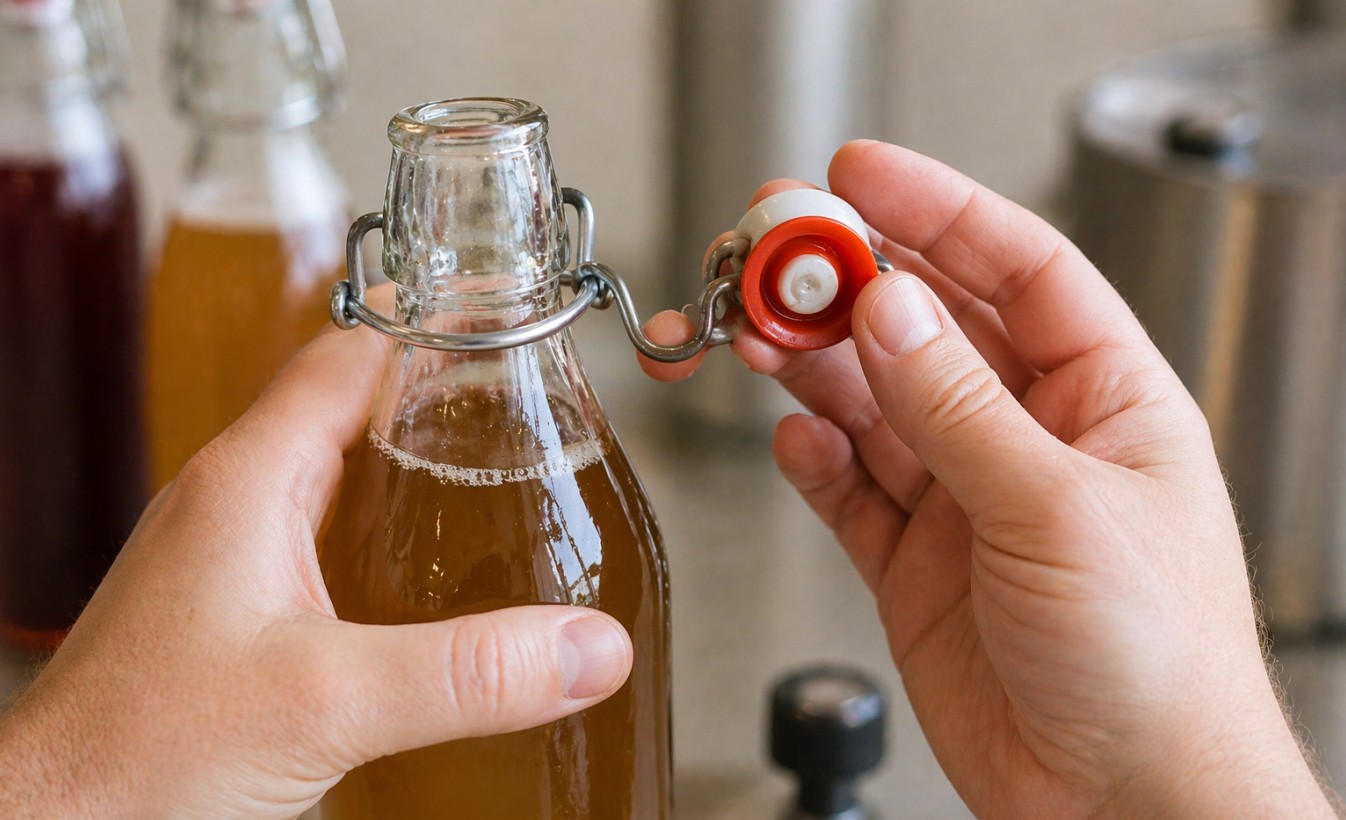
The second ferment is different. You bottle the liquid, add a small amount of something sweet, and seal it tight. The yeast eats that new sugar and produces CO2 again, but this time the gas has nowhere to go. It dissolves into the liquid. That’s your fizz.
Flavour comes from whatever you added. Ginger adds warmth and spice, berries add tartness, citrus adds brightness. The sealed environment also mellows the sharpness of the first ferment and integrates the flavour into the liquid rather than letting it sit on top.
Equipment that makes it work
You need bottles that can hold pressure. That’s non-negotiable.
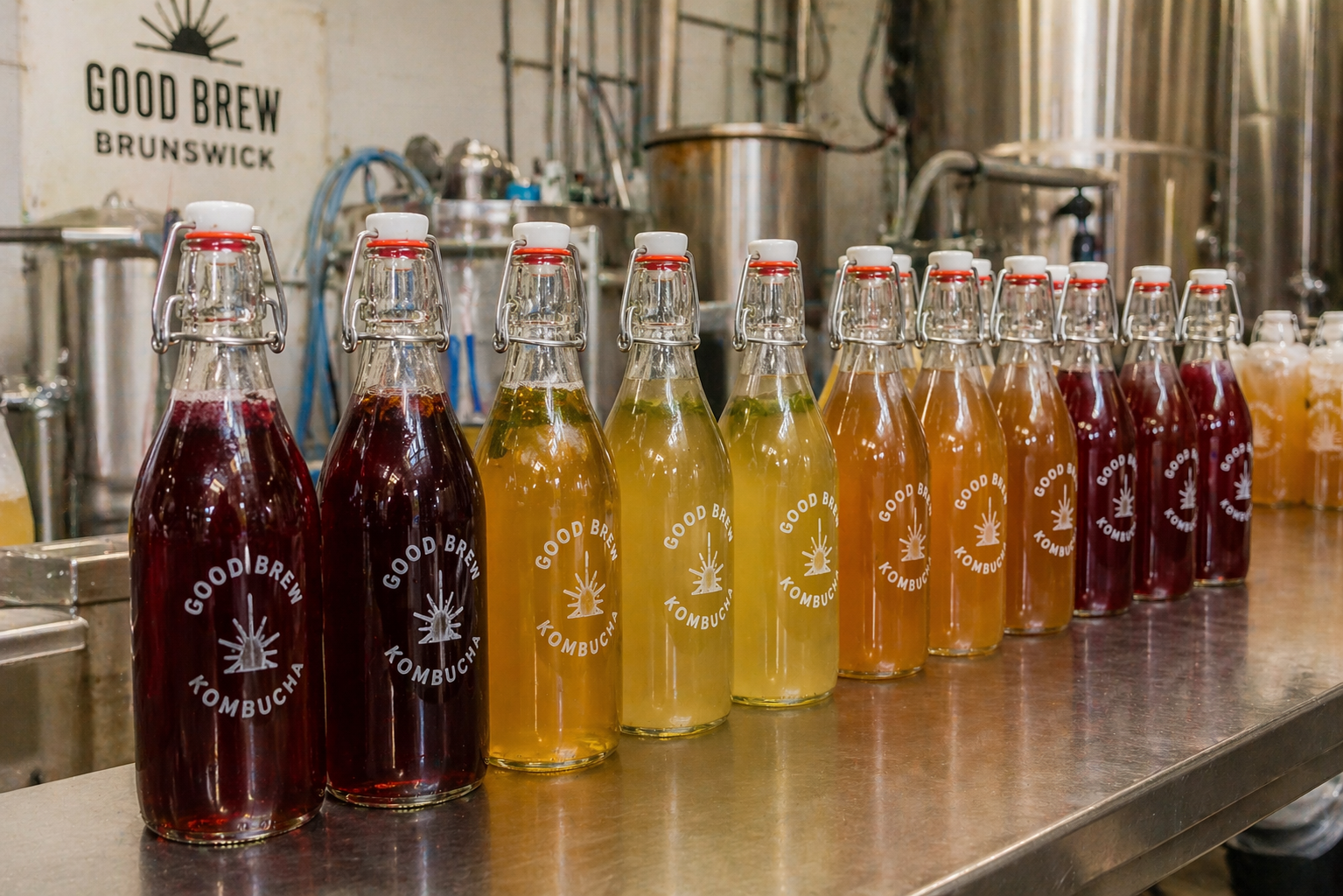
Flip-top bottles (sometimes called Grolsch bottles) are the standard choice. They’re built for carbonated liquids, the gasket reseals every time you open them, and they’re thick enough to handle the pressure a healthy second ferment generates. Swing-top bottles in the 500ml or 1-litre range are what most home brewers use.
What you should not use: thin glass jars, mason jars with loose lids, or cheap bottles with untested seals. Thin glass can crack or shatter under sustained CO2 pressure. A bottle that’s been sitting on the bench for four days can hold several atmospheres of pressure, which is enough to do real damage if the glass fails.
Good Brew sells flip-top bottles suited to kombucha, along with flavouring kits that take the guesswork out of amounts. If you’re using bottles you already have, check them for chips or cracks before every use and replace the gaskets when they start to feel worn.
How to flavour kombucha
The flavour guide below is deliberately conservative. Too much sugar or fruit is the most common cause of over-pressurised bottles, so it’s much safer to add a small amount, taste the result, and increase next time than to start aggressive and have bottles crack in the cupboard.
| Flavour | Amount per 500ml | 2F time | What it tastes like |
|---|---|---|---|
| Fresh ginger (grated) | 1 to 2 tsp (5 to 10g) | 2 to 3 days | Warm, spicy, slightly sweet |
| Frozen berries | 1 to 2 tbsp (15 to 30g) | 2 to 3 days | Tart, fruity, deep colour |
| Fresh berries | 2 to 3 tbsp (30 to 45g) | 2 to 3 days | Delicate, juice-forward |
| Citrus zest or juice | 1 tsp zest or 1 tbsp juice | 2 to 3 days | Bright, zesty, clean |
| Fresh herbs (mint, basil) | 1 small sprig | 2 to 3 days | Fresh, aromatic, subtle |
| Local honey | 1 tsp (5ml) | 2 to 3 days | Floral, smooth, gentle fizz |
| Unsweetened fruit juice | 1 to 2 tbsp (15 to 30ml) | 2 to 3 days | Bright, depends on juice |
A few flavours worth a note. Good Brew’s flavouring kits use certified organic ingredients because the end flavour is cleaner when the base ingredient is good. Local honey from Victorian suppliers works particularly well because it isn’t heat-treated the way most commercial honey is, which means it brings its own live character into the ferment.
For more on how commercial brewers build flavour profiles, our post on The Changing Taste of Kombucha walks through how sharpness, acidity, and aromatics balance together.
Troubleshooting a second ferment that’s gone sideways
Four problems cover most 2F failures. Here’s the cause and fix for each.
Kombucha not fizzy. The most common complaint. Usually caused by not enough sugar for the yeast to work on, bottles that aren’t sealing tightly, or the room being too cold. Fix: add a small increase in flavouring (another teaspoon of fruit or half a teaspoon of sugar), check every gasket for a clean seal, and move the bottles somewhere warmer. Anywhere between 20 and 26 degrees is the sweet spot. Below 18 degrees, 2F slows right down.
Over-carbonated and at risk of bursting. You’ve used too much sugar, left it too long, or the room’s been warmer than usual. The fix is immediate refrigeration. Move all the bottles to the fridge, leave them for 24 hours, then burp each one over the sink (crack the seal slowly and let the pressure release) before storing them long term. Our post on 5 Common Kombucha Brewing Mistakes goes deeper on pressure management.
Off-flavour or overly vinegary. Your 2F has run too long and acid has built up. Either the first ferment was already on the edge of tart when you bottled, or the 2F went past the point where it should have been refrigerated. Fix: shorter 2F next time, or refrigerate sooner. Once a batch is heavily vinegary you can’t really undo it. Use it for salad dressing or as a switchel base.
Cloudy liquid or yeast strands. Usually normal, especially with fruit-based flavours. Fruit pulp and yeast can settle or float. If it bothers you, strain the bottle through a fine mesh when pouring. Cloudiness itself isn’t a sign of anything wrong.
When to refrigerate (and how to tell)
The rule is simple. Refrigerate before the bottles become a hazard, not after.
The easiest test is to use one plastic bottle as a pressure gauge alongside your glass bottles. Fill it with the same batch, add the same flavouring, seal it tight. When it feels rock-hard to the squeeze (usually day two or three in warm weather), it’s time to move everything to the fridge. Glass bottles stop giving you feedback once they’re past a certain point.
A tap test works too. Tap the side of a flip-top bottle with your fingernail. Early in the ferment it sounds dull and hollow. As pressure builds, it sounds sharper and brighter. When you can hear a clean tap, the bottle has serious CO2 in it.
Temperature matters more than many home brewers realise. A Melbourne summer afternoon will push a 2F much faster than a winter morning. In January, you might need to refrigerate after 36 hours. In July, you could safely go five days. Don’t run a fixed timer. Read the bottles.
One more thing on timing. The longer your 2F runs, the more alcohol the yeast produces. Commercial kombucha in Australia is regulated for alcohol content, but home brews aren’t tested and can drift higher if they go long. If you’re brewing for kids, pregnant partners, or anyone who doesn’t drink, err on the shorter side and refrigerate earlier. Two days is usually plenty for a gentle, low-alcohol ferment.
The difference between decent and great
A home brew that’s finished its first ferment properly is usually decent. The gap between decent and great is almost entirely in the second.
The fastest way to get this right is hands-on alongside someone who runs ferments every day. Good Brew runs monthly workshops at the Brunswick brewery where you’ll work through both ferments, try different flavouring approaches, and leave with a brew going. If you can’t make a workshop, our flavouring kits and flip-top bottles are set up to take the guesswork out. The amounts are pre-measured, the timings are documented, and the ingredients are the same certified organic ones we use in our commercial brews.
Come into the Brunswick tap room if you want a reference point for what a well-executed second ferment tastes like. Once you’ve felt the difference on your palate, you’ll know what you’re aiming for at home.