
 54 Hope St, Brunswick VIC 3056
 0406 154 886
 Email Us

Kombucha ingredients start as four things: tea, sugar, water and a live culture. What reaches the bottle is what the culture left behind, plus anything added after the ferment. An Australian label lists those in descending order of ingoing weight. So the first two or three entries are most of the drink.
You are holding a bottle, or reading a product page, and the list on the back is shorter or longer than you expected. This page is for working that out.
What is in a bottle of kombucha
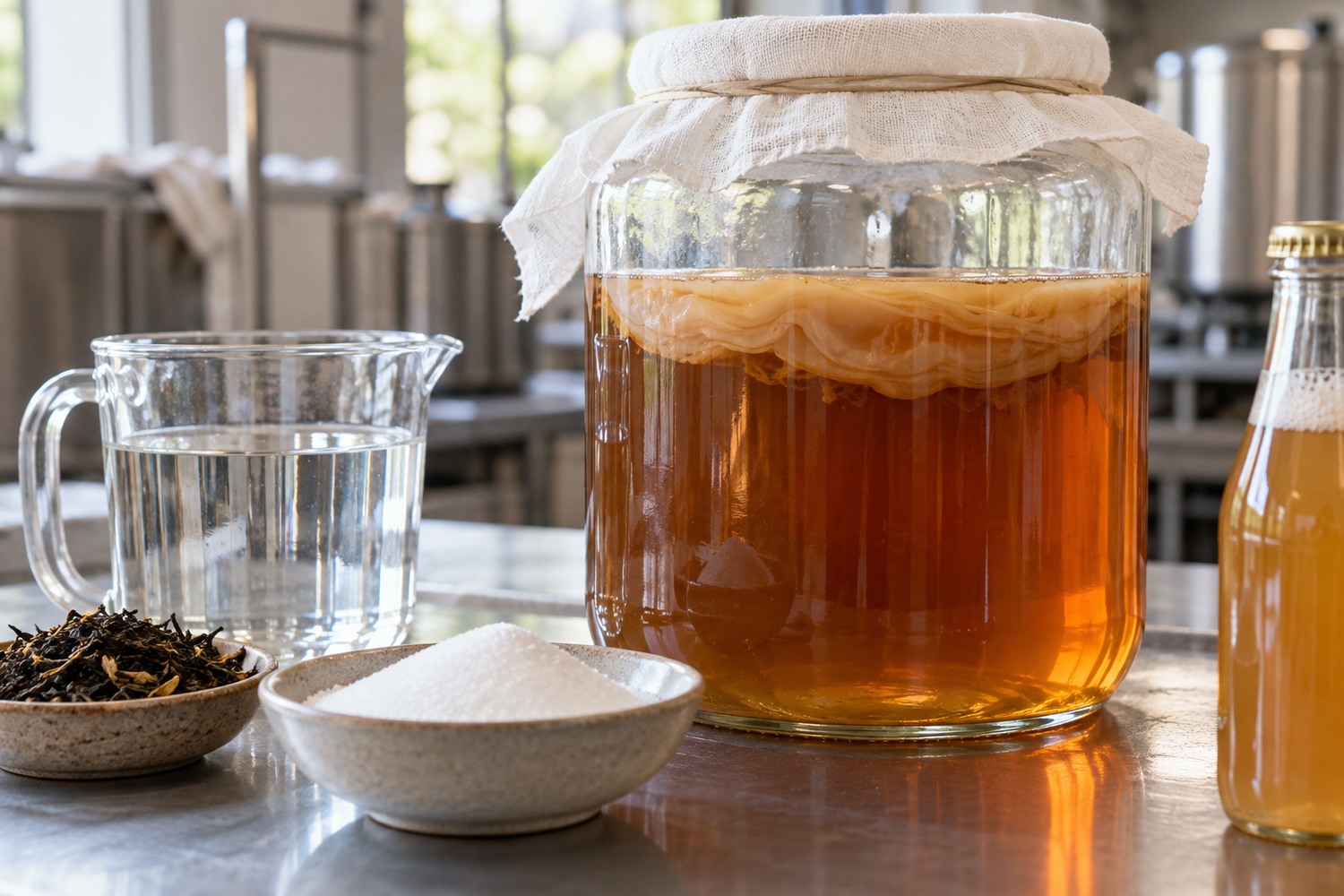
A bottle of kombucha is fermented tea. It is not sweet tea with something stirred through it.
Water is most of the drink by volume, which is why a producer names the water it uses. A Melbourne brewer might use filtered tap water, or spring water brought down from Daylesford.
The tea comes next, and it is no longer the tea that went in. The tartness was made in the vessel, not poured into it. Our page on what kombucha is covers the brewing side.
Sugar is on the list because the ferment started with it. Most of it has gone by the time the bottle is capped. How kombucha compares with a sugary drink is a separate question.
The culture is the fourth thing, and it is the part that was alive in the vessel. Its work is why the tea and the sugar do not taste as they went in.
What gets added after fermentation
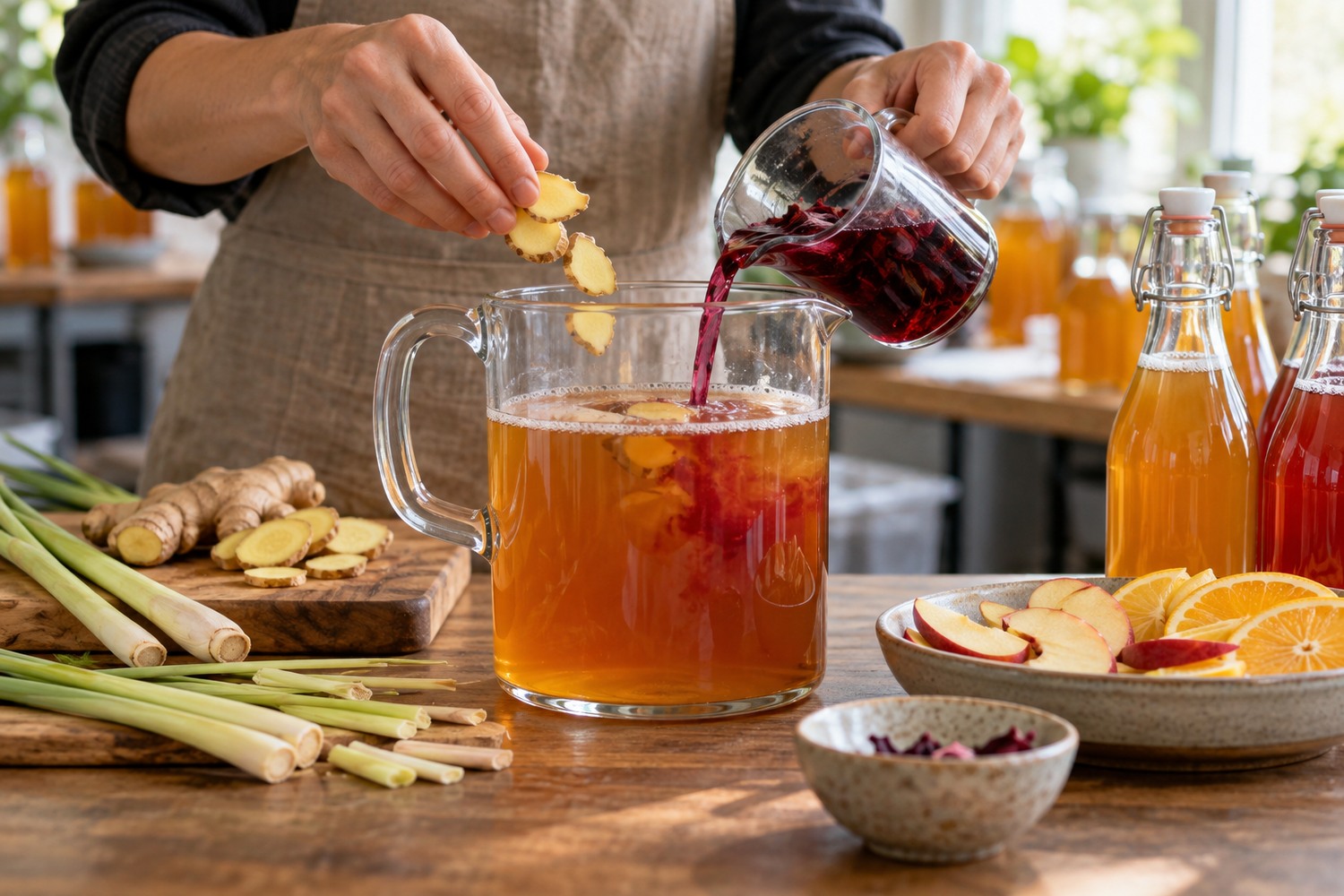
Once the ferment is finished, anything else that goes in appears on the label beside the base ingredients.
Juice and whole fruit are the most common, carrying flavour, colour and a little sweetness. Herbs, spices and flowers bring flavour with almost no sweetness: ginger, hibiscus and lemongrass turn up for that reason.
Some products carry a sweetener added after the ferment, such as monk fruit or stevia. A sweetener makes a tart drink taste rounder without more sugar going in. Some carry an added acid, which sharpens the flavour and holds it steady. Some carry a preservative, which slows what would spoil the drink on a shelf.
None of that is a warning list. Each one is an ingredient doing a job.
How to read a kombucha ingredients list on an Australian label
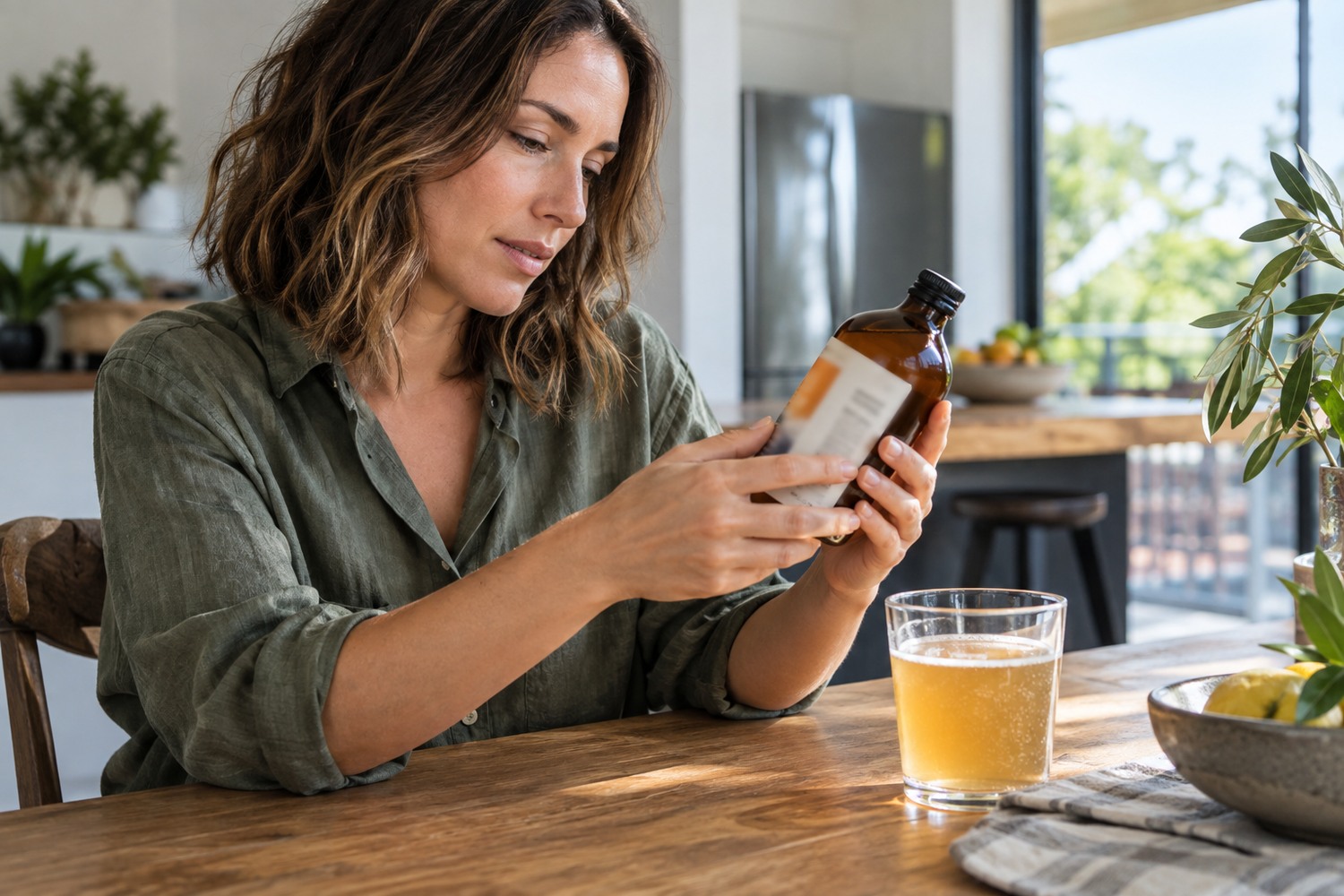
The rules sit in the Australia New Zealand Food Standards Code, in Standard 1.2.4, in the compilation in force from 2 September 2025. They cover kombucha because the Code treats it as a food. Elsewhere it defines a brewed soft drink as a product prepared by a fermentation process from water with sugar and one or more fruit or vegetable extractives or infusions.
Ingredients are listed in descending order of ingoing weight. Ingoing weight is how much of each thing went in when the drink was made. Food Standards Australia New Zealand puts it plainly: the first ingredient listed contributed the largest amount, and the last contributed the least. So the top of the list is most of what is in your hand.
Sometimes an entry is followed by more names in brackets. That is a compound ingredient, an ingredient that is itself made of several things. Where it makes up 5% or more of the food, everything inside it has to be named. On a kombucha label that bracket can hold the ferment, opened up into water, tea, sugar and culture.
A food additive is a substance put in to do a job rather than to be food. The Code requires one to be listed by its class name, then the name or code number of the substance in brackets. The first word tells you the job, and the bracket tells you which substance is doing it.
A flavouring substance is one added for flavour. The Code lets it be shown as the word flavouring or flavour, or by a more specific name, and what it is made of does not have to be listed. So one word can stand for a mixture.
The regulator also says most packaged foods have to show the percentage of their key or characterising ingredients. That is why a list sometimes carries a figure beside an ingredient, such as ginger 2%.
Why caffeine is not on the ingredient list
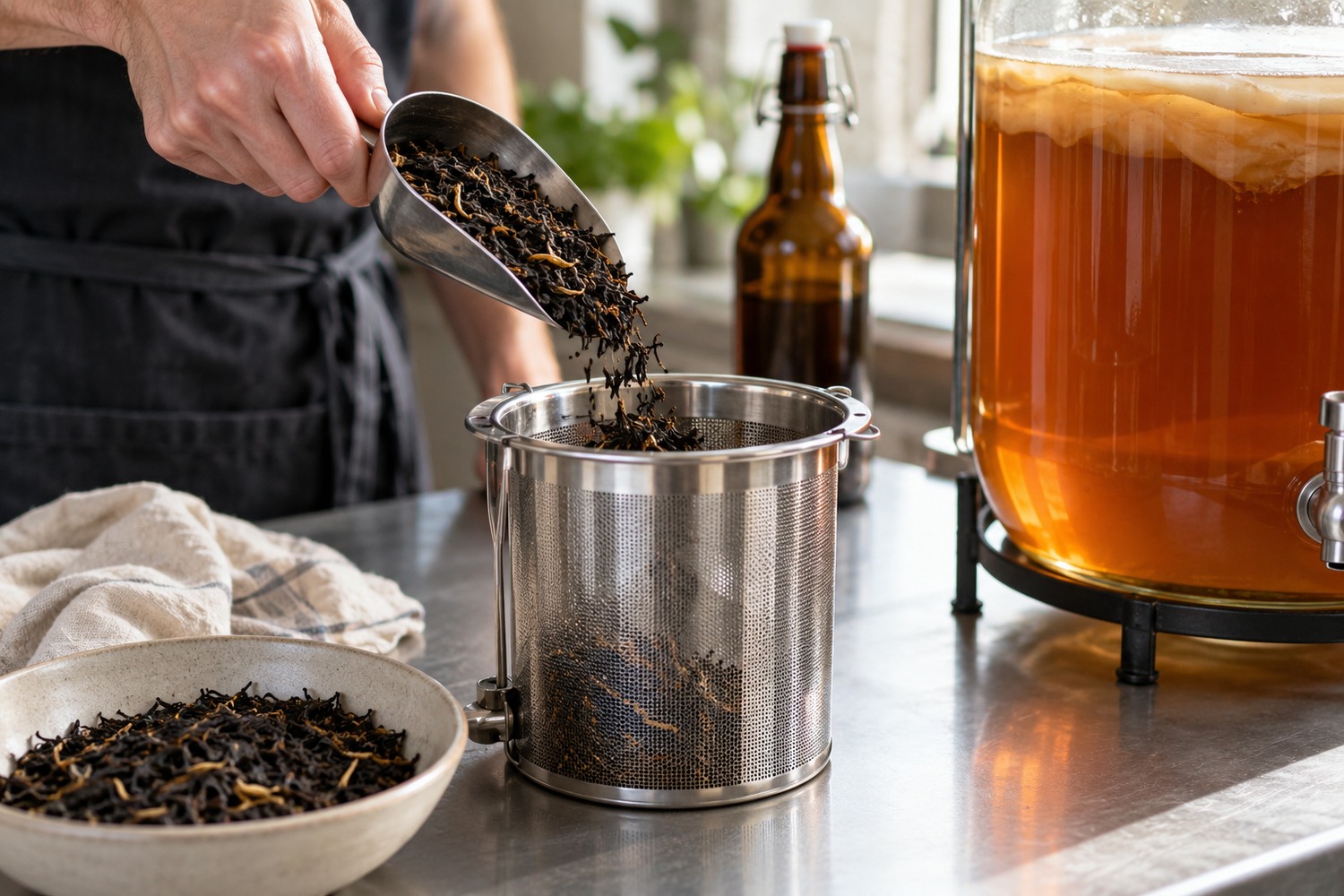
Kombucha brewed from tea carries caffeine, and it is not on the ingredient list. The caffeine came in with the leaf rather than being added to the drink.
Food Standards Australia New Zealand says caffeine occurs naturally in foods such as coffee, tea and cocoa. Standard 1.2.4 only requires caffeine to be listed where it has been added to a food. Nothing requires a producer to list what arrived in the tea.
The same regulator says a food with added caffeine must also carry a statement on the label saying so. So a caffeine statement means some was put in. It is not a measure of what fermented tea already had.
How much is in a bottle depends on the tea and on the ferment, and no figure for it appears here. A number borrowed from another drink would be a guess.
What a short ingredient list does and does not prove
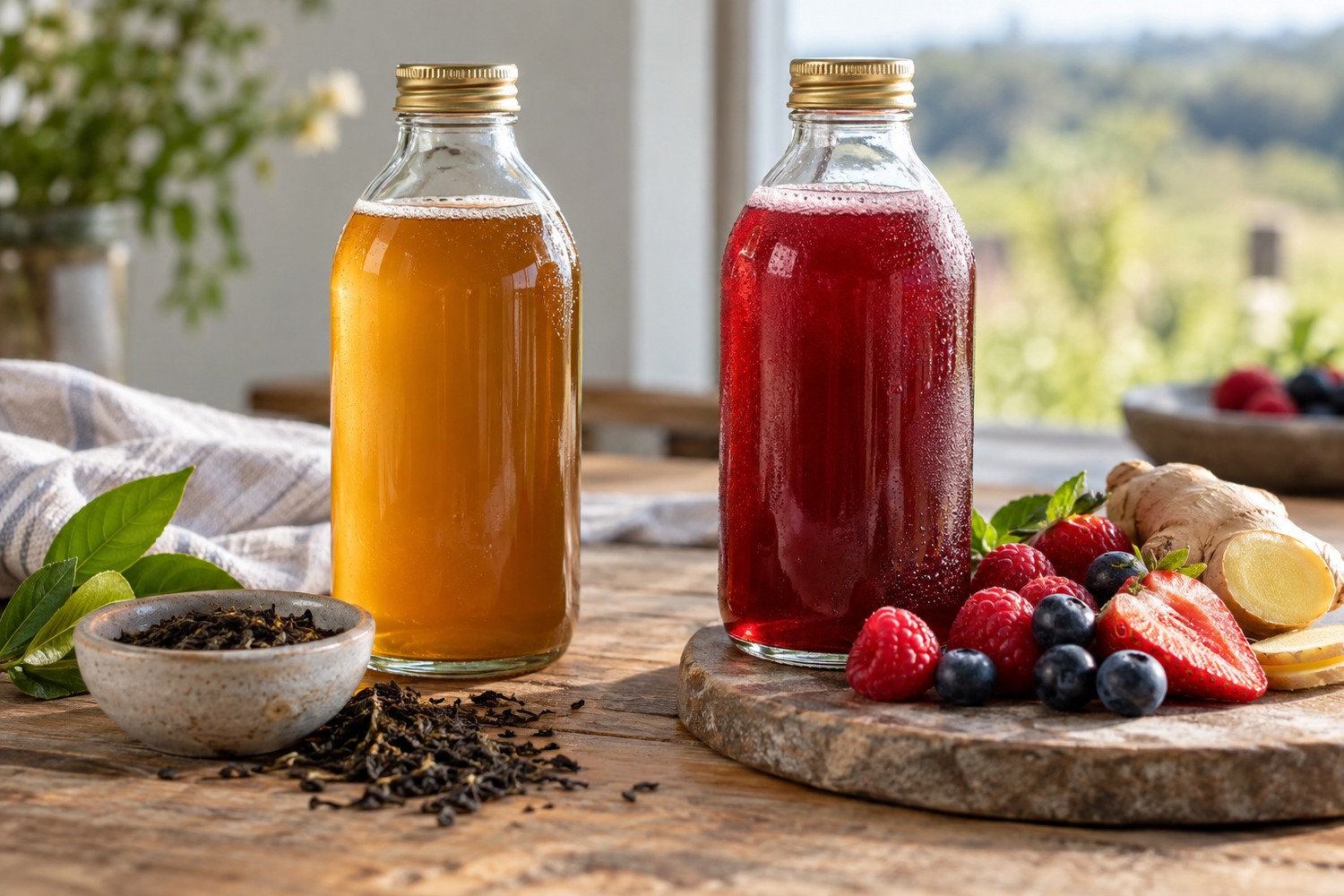
A short ingredient list tells you how a drink was built. It does not tell you how good it is.
What it does prove is narrow, but worth having. Fewer things went in, so most of the flavour comes from the ferment and whatever whole ingredient joined it.
What it does not prove is that the drink is better. A longer list is not a mark against a product. Juice, whole fruit and spices are ingredients too. A producer who lists more may be making a more complicated drink, not a worse one.
The list is a record of what went in, not a score. For a fuller run at the rest of the label, our guide to choosing the right kombucha goes through it.
What the ingredient list does not tell you
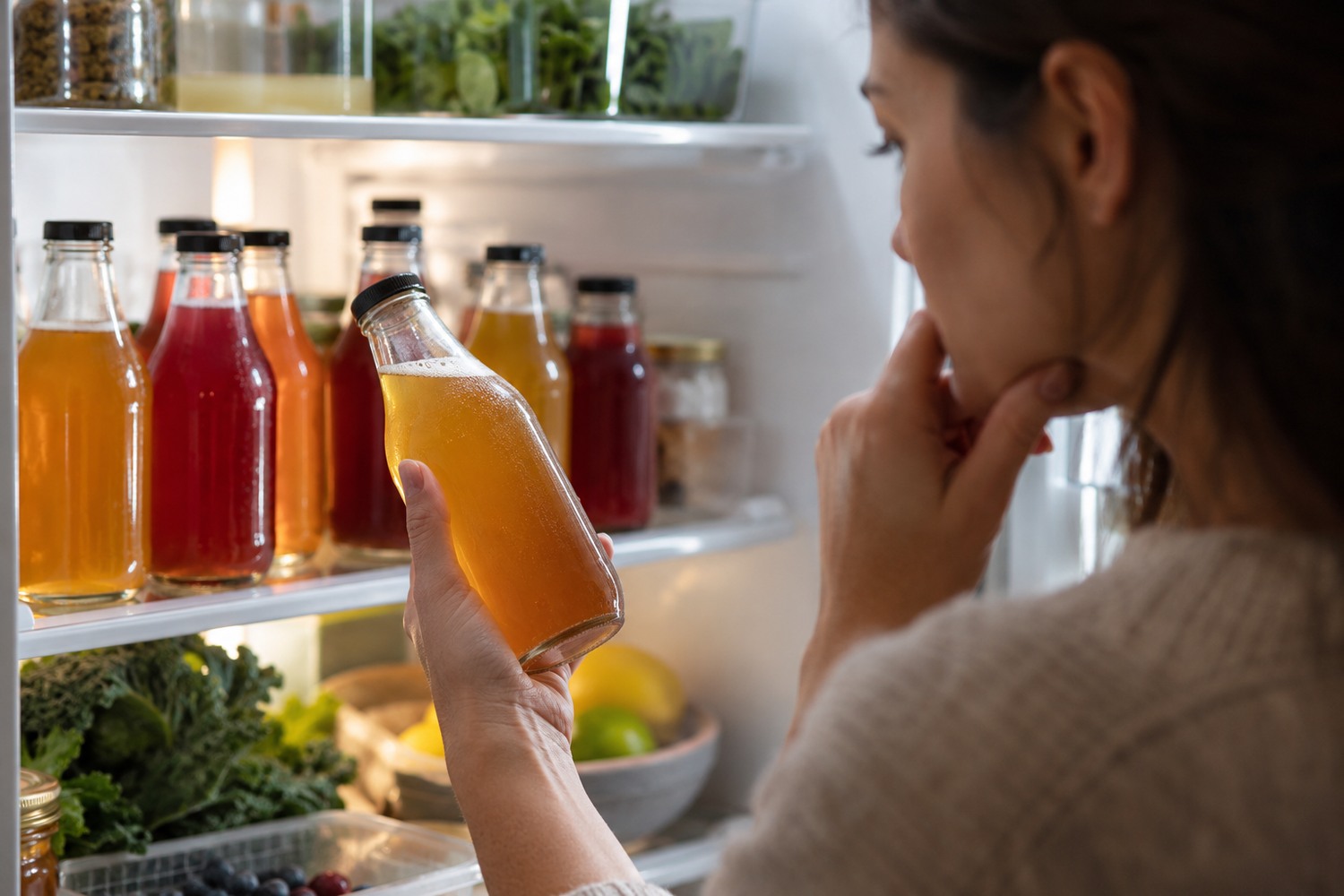
The list covers what went in. There are four questions it does not answer.
Whether the kombucha is raw or pasteurised is not there. Pasteurised means it was heated, and what raw kombucha means is covered separately.
How much sugar is left after the ferment is not there. The list says sugar went in, not how much survived.
How much alcohol the ferment left behind is not on the list either, and whether kombucha is alcoholic is a question with its own page.
It does not tell you how much caffeine is there, since caffeine was never an added ingredient.
There is one question worth putting to a producer, and it is not whether the list is short. Ask what the last two entries are doing there. The first ones are easy to guess. The end of the list is where the choices were made. Turn around whichever bottle is in front of you and read it. If a producer publishes no list, ask for one: the label has to carry it, so it exists. The Good Brew kombucha range is one place to start, and the same question works on every bottle in the fridge.
Frequently asked questions
What is kombucha made from?
Fermented tea. Tea, sugar, water and a live culture go in together, and the culture works through the sugar until the drink turns tart. Anything else you find in the bottle was put there afterwards.
Why are kombucha ingredients listed in that order?
Because the order is set by how much of each thing went in. The heaviest comes first, so the start of the list is the bulk of the bottle and the end of it is the smallest part.
Does kombucha have caffeine in it?
Yes, if it was brewed from tea. The list only has to name caffeine a producer adds, so a tea ferment carries some without it showing up there. The amount varies between brews.
What does flavouring mean on a kombucha label?
Flavouring is a permitted short entry for something put in to give flavour. Its own components are not broken out, so the entry hides more detail than it shows.
Does a shorter ingredient list mean a better kombucha?
Not by itself. A short list tells you few things went in, which is useful. A longer one may only mean more fruit or more spice.