
 54 Hope St, Brunswick VIC 3056
 0406 154 886
 Email Us


A low sugar claim sets an upper limit for a drink: 2.5 g of sugars per 100 mL. It does not give the exact amount. The nutrition panel tells you the amount in that product. No added sugar is a different claim with its own conditions. Read the words and the figures together.
What does low sugar mean for kombucha?
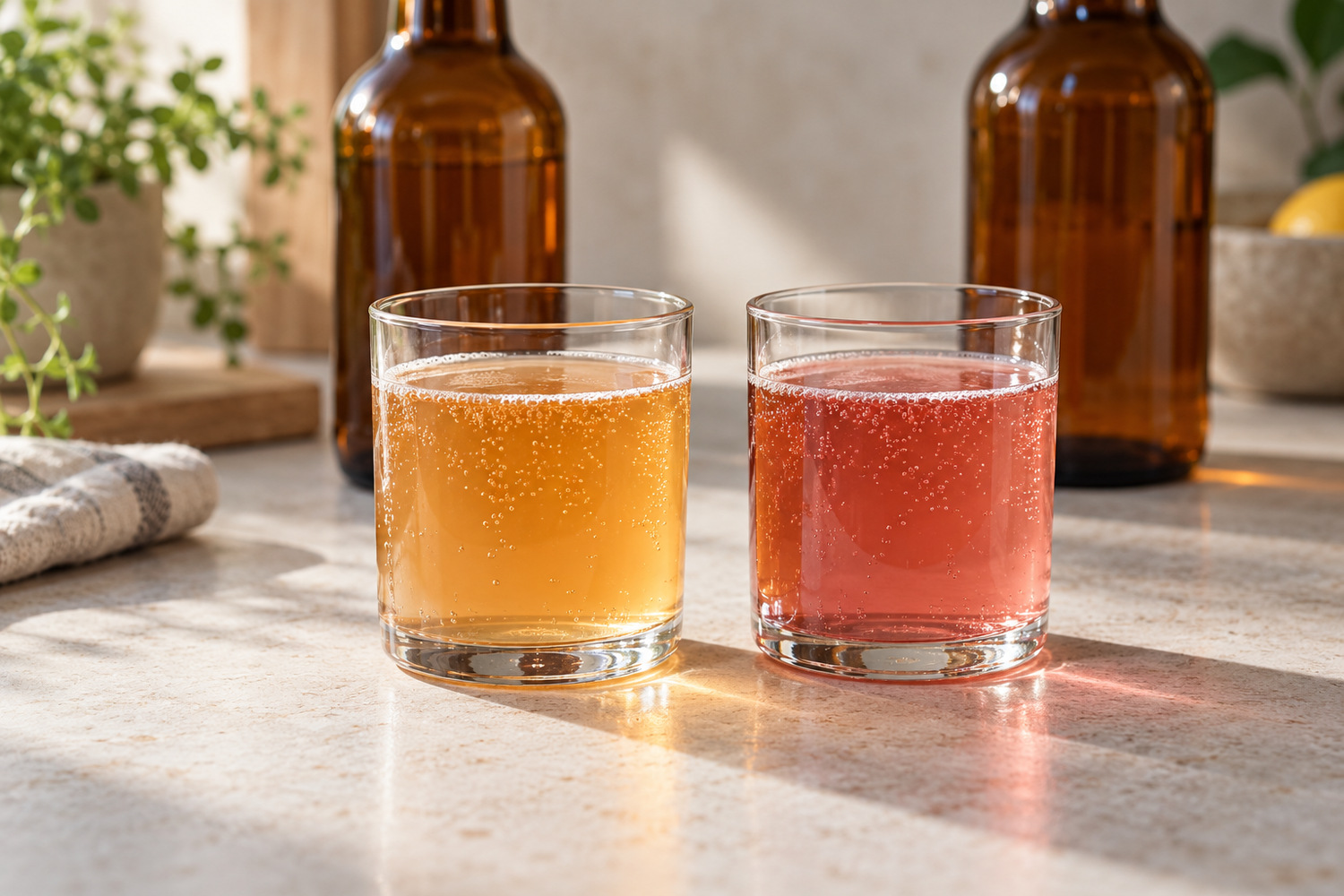
Schedule 4 of the Australia New Zealand Food Standards Code sets the liquid-food limit. Food Standards Australia New Zealand also explains it on its sugar labelling page. A low sugar drink must contain no more than 2.5 g of sugars per 100 mL.
That is an upper limit. It does not tell you the exact amount, and it does not require sugar to be present. Two drinks may both fall below that ceiling and still have different figures on their panels.
The words are a claim a producer chooses to make. They are separate from the sugars figure in a drink’s nutrition panel. The panel gives you an amount even when there is no sugar claim on the front.
For a shopper, that makes the comparison more useful than the phrase alone. Look at the same line and column on both bottles. Otherwise, you may be comparing a claim on one with a figure for a different volume on the other.
What does x% sugar free mean?
Schedule 4 lists a percentage-free descriptor for sugars, such as x% sugar free. Its condition is that the food meets the low sugar conditions. Keep the percentage in view: it is part of the wording the table addresses.
Standard 1.2.7 of the Code sets the broader rules for nutrition claims. The sugar row must be read alongside those rules, rather than as permission to use any wording.
An unqualified sugar free kombucha claim must not mislead under Australian Consumer Law. The ACCC says product claims must be accurate and based on reasonable grounds. Meeting the low sugar ceiling does not automatically settle whether sugar free wording is appropriate. A figure in grams per 100 mL is not a percentage-free claim either.
If a producer’s wording leaves you unsure, ask what it means for that particular drink. Read the complete claim rather than treating low sugar and sugar free as interchangeable.
Which column should you use to compare drinks?
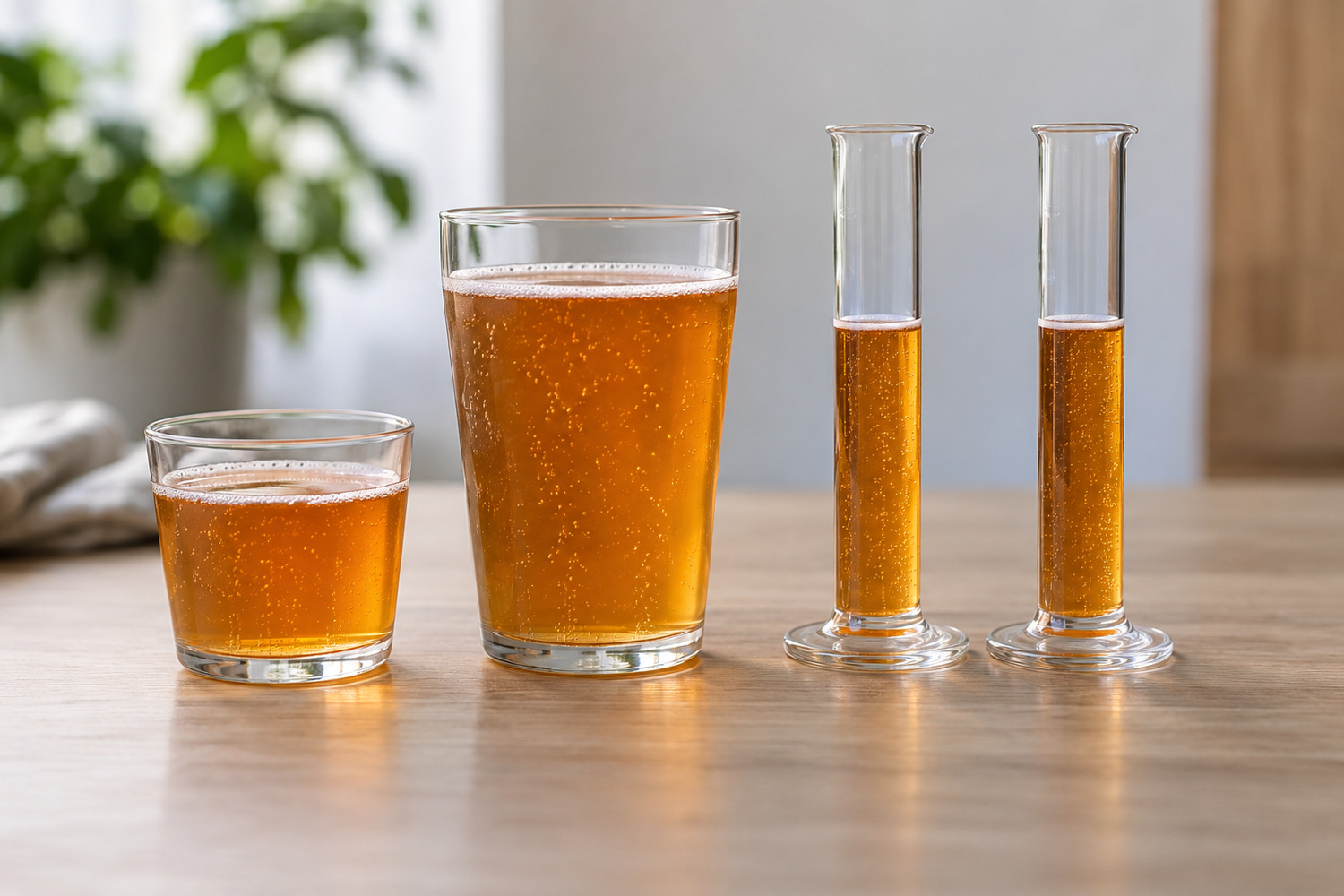
Use the per-100-mL and per-serving columns for different questions. The number of servings in the package adds context to both. Food Standards Australia New Zealand explains that each food business sets its serving size, so sizes can differ between products.
Suppose one drink uses a small glass as its serving and another uses a whole bottle. The first can show a smaller per-serving figure without having less sugar per 100 mL. Changing the comparison column removes that serving-size difference.
- Per 100 mL gives the average amount in the same volume of each drink. Use it to compare sugar concentration.
- Per serving gives the average amount in the stated portion. Read the serving size beside it.
- Servings per package tells you how many of those portions the pack contains. One serving is not always one bottle.
It does not remove differences between the drinks themselves. Both their recipes and their serving sizes may differ. Compare the same column first, then use the stated portion to understand the amount you plan to pour.
What does Good Brew’s published flavour panel show?
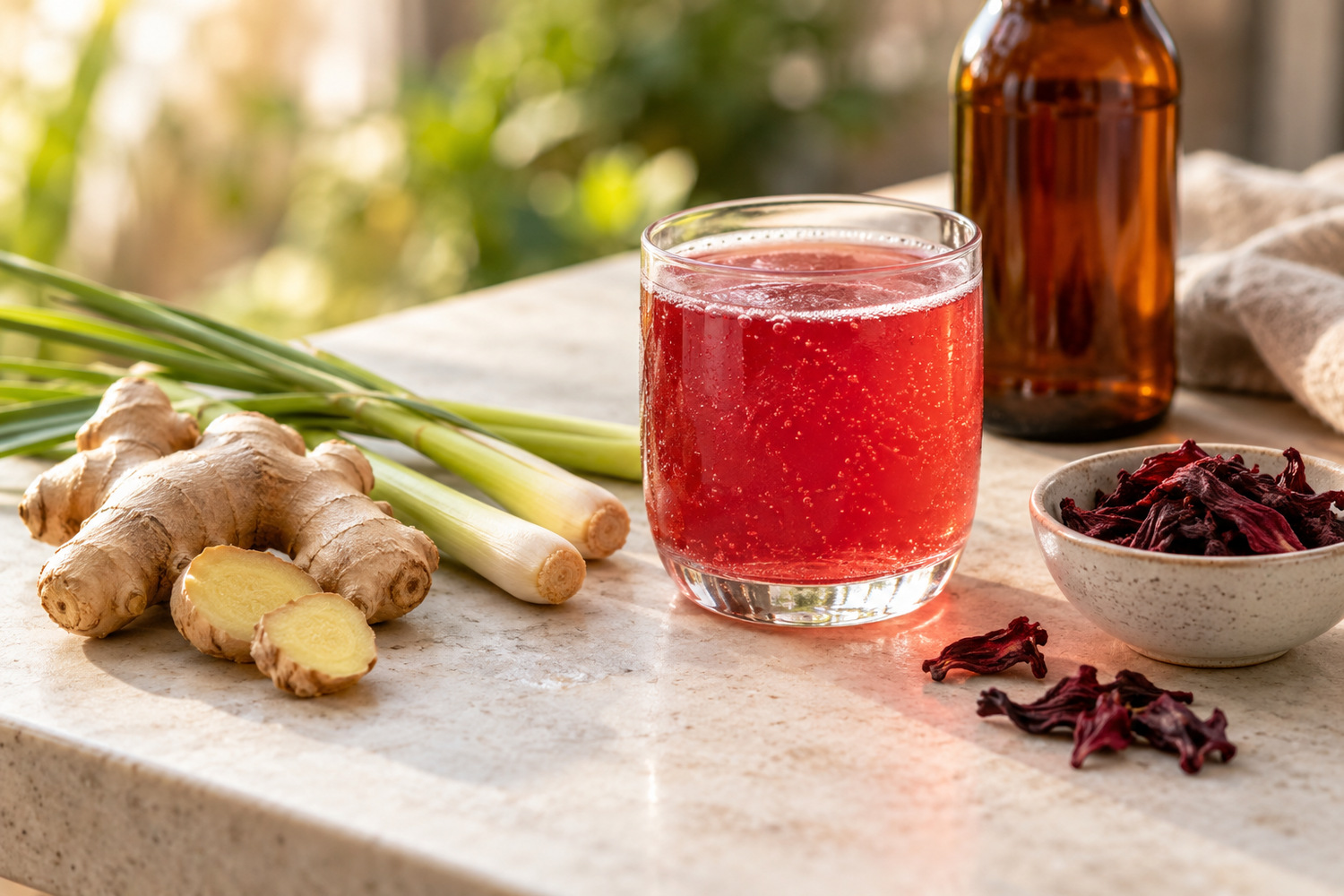
Take the published Hibiscus, Lemongrass and Ginger panel. Our product page gives the following information for the 330 mL serving, checked on 20 October 2026.
The two sugars figures describe different volumes of the same drink. A 330 mL serving is 3.3 times 100 mL, so its sugars figure is larger. The larger serving figure does not mean the drink has become more concentrated.
| Panel field | Published value |
|---|---|
| Servings per package | 1 |
| Serving size | 330 mL |
| Sugars per 100 mL | 0.5 g |
| Sugars per serving | 1.7 g |
Multiplying the displayed 0.5 g by 3.3 gives 1.65 g. That is consistent with the displayed 1.7 g after rounding. It does not reveal an unrounded test result: the Code calls for average quantities, and the printed figures have limited precision.
The page also offers a 750 mL bottle. Its displayed 330 mL serving panel is not a separate label for that larger pack. Check the serving size and servings per package on the bottle you choose, rather than carrying the one-serving assumption across.
This is one named flavour’s published example. It is neither a range-wide average nor a measurement of the individual bottle in your hand.
Can total sugars tell you whether sugar was added?
No. Food Standards Australia New Zealand explains that total sugars includes both sugar naturally present and sugar added as an ingredient. That single line does not split the two amounts.
No added sugar and unsweetened are claims with their own conditions. Neither promises zero total sugars. A low finished figure alone cannot prove that sugar was never added.
Newer Schedule 4 rules for a no added sugar claim include:
- No added sugar ingredients, using the Code’s definition.
- No more than 7.5 g of sugars per 100 mL for a liquid food.
- Conditions on increasing sugars through carbohydrate breakdown during production.
Unsweetened has further restrictions on sweeteners. These are not complete eligibility checklists. The changes introducing the 7.5 g ceiling allow the earlier Code rules to be followed during a transition ending 13 December 2027. That ceiling is therefore not a universal test for every bottle on sale today.
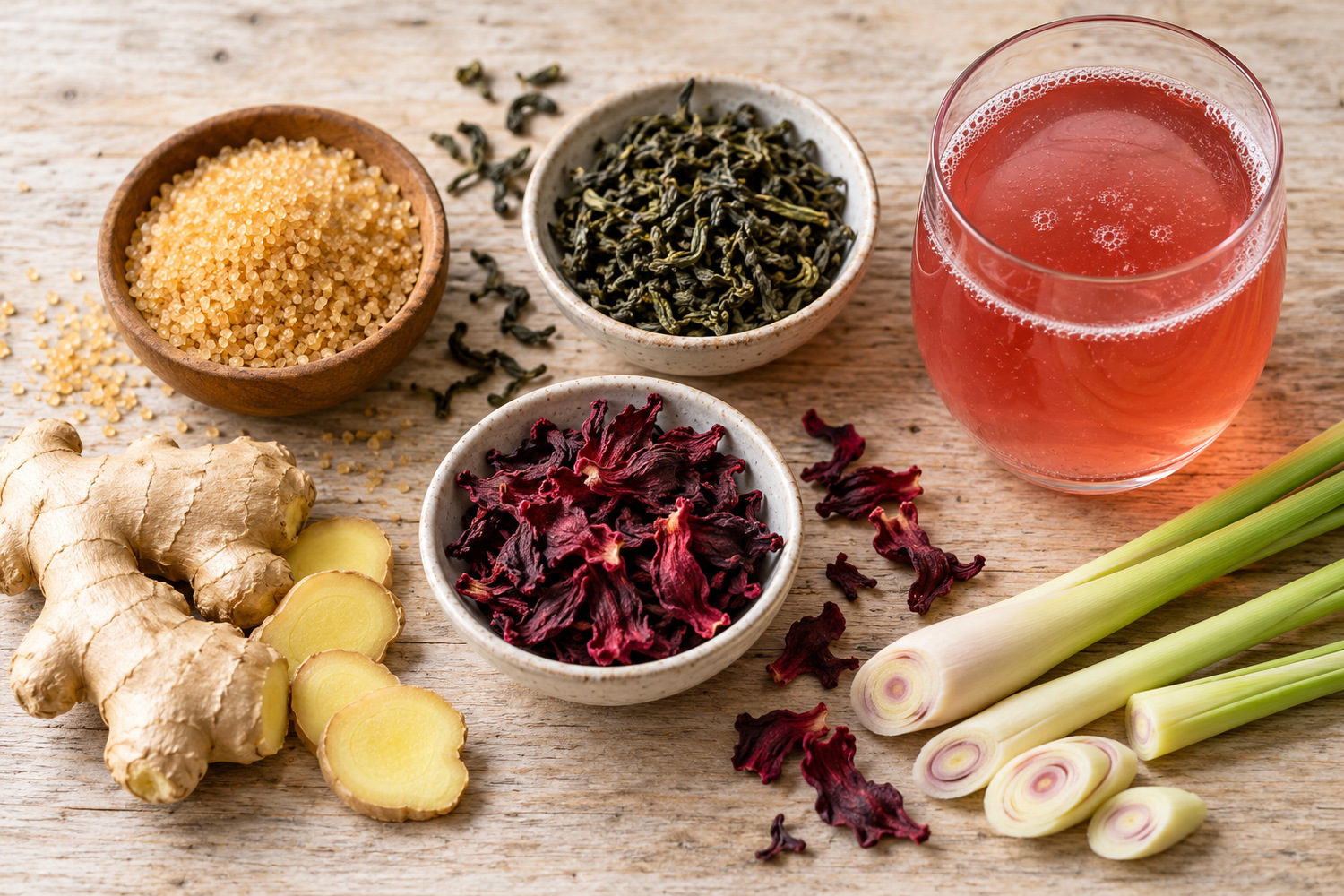
Our Hibiscus, Lemongrass and Ginger product page lists raw sugar in the brewing ingredients and monk fruit. Its finished sugars figure does not establish a no added sugar or unsweetened claim.
The ingredient list and the panel answer different questions. An ingredient list helps identify what went into a product. The panel reports its average nutrient quantities. You cannot work backwards from the sugars line to reconstruct the recipe or decide whether a no added sugar claim is allowed.
Fermentation does not turn that panel into a record of the starting recipe. Our guide to the brewing method covers making kombucha at home. It does not establish the finished sugar figure for a bottled flavour, and a home-brew recipe should not stand in for that flavour’s panel.
Where can you check a particular bottle?
Use that flavour’s product information and the pack you are buying. Match the name, size and serving details before comparing figures. If the website and the bottle differ, contact us about that flavour and pack size. Keep both sets of information available so the difference can be identified. Do not assume that a panel for another bottle size answers the question.
For the wider drinks comparison, kombucha as a daily swap covers choosing it in place of a sugary drink. That question is separate from the legal meaning of a label claim, and no broad comparison supplies the sugar figure for every flavour or pack.
For the differences between drink types, use the existing soft-drink comparison. If you are ready to choose a bottled flavour, open its product page and check the serving details before ordering.
Frequently asked questions
Does low sugar mean no sugar?
No. The claim allows an amount up to the liquid-food ceiling. It does not tell you that the amount is zero, or that it must be above zero.
Is the sugars line in the panel a claim?
The required sugars figure is not a nutrition content claim. That rule does not cover everything else on the panel: extra information a producer chooses to add can itself be a claim.
Why do two kombuchas show different sugar per serving?
They may use different serving sizes, contain different amounts of sugar per 100 mL, or both. Comparing their per-100-mL figures separates concentration from portion size.
Does a bottle without a sugar claim contain more sugar?
You cannot tell from the missing words. A producer need not make a claim just because a drink meets its conditions. Read the panel to compare amounts.