
 54 Hope St, Brunswick VIC 3056
 0406 154 886
 Email Us

Kombucha has come a long way from the kitchen benchtop.
Once a symbol of the home fermentation movement, it is now part of the Australian mainstream. You can find it on tap in cafés, in the fridges at petrol stations, and in supermarket aisles beside soft drinks and sparkling water.
As 2026 begins, the question is not whether Australians drink kombucha but what kind they choose. The answer reflects bigger changes in how the country thinks about health, sustainability, and taste.
The maturity of a once-niche drink
IBISWorld estimates Australia’s kombucha industry is now worth more than $200 million a year, up from less than $10 million a decade ago. Growth has slowed slightly, but the category has stabilised as a permanent part of the beverage market.
What was once a curiosity is now a habit. Market research from Roy Morgan shows that around one in six Australian adults drinks kombucha at least occasionally. The audience has widened from inner-city health enthusiasts to regional households and older consumers looking for lower-sugar alternatives.
Industry analysts suggest the market is entering what they call the “second wave” — a phase where innovation, sustainability, and authenticity matter more than novelty.

A revolution in flavour
Flavour has become the front line of change. The early kombuchas were tart, vinegary and often polarising. Today, brewers are finding a balance between authenticity and approachability.
Popular flavour directions for 2026
Native botanicals such as lemon myrtle, finger lime and wattleseed
Low-waste fruit infusions made from surplus or imperfect citrus and berries
A 2024 study in Food Research International found that Australian consumers increasingly prefer kombucha with balanced acidity and fruit-forward aroma. That shift mirrors the move from soda to naturally fermented drinks with complexity but less sugar.
The function focus
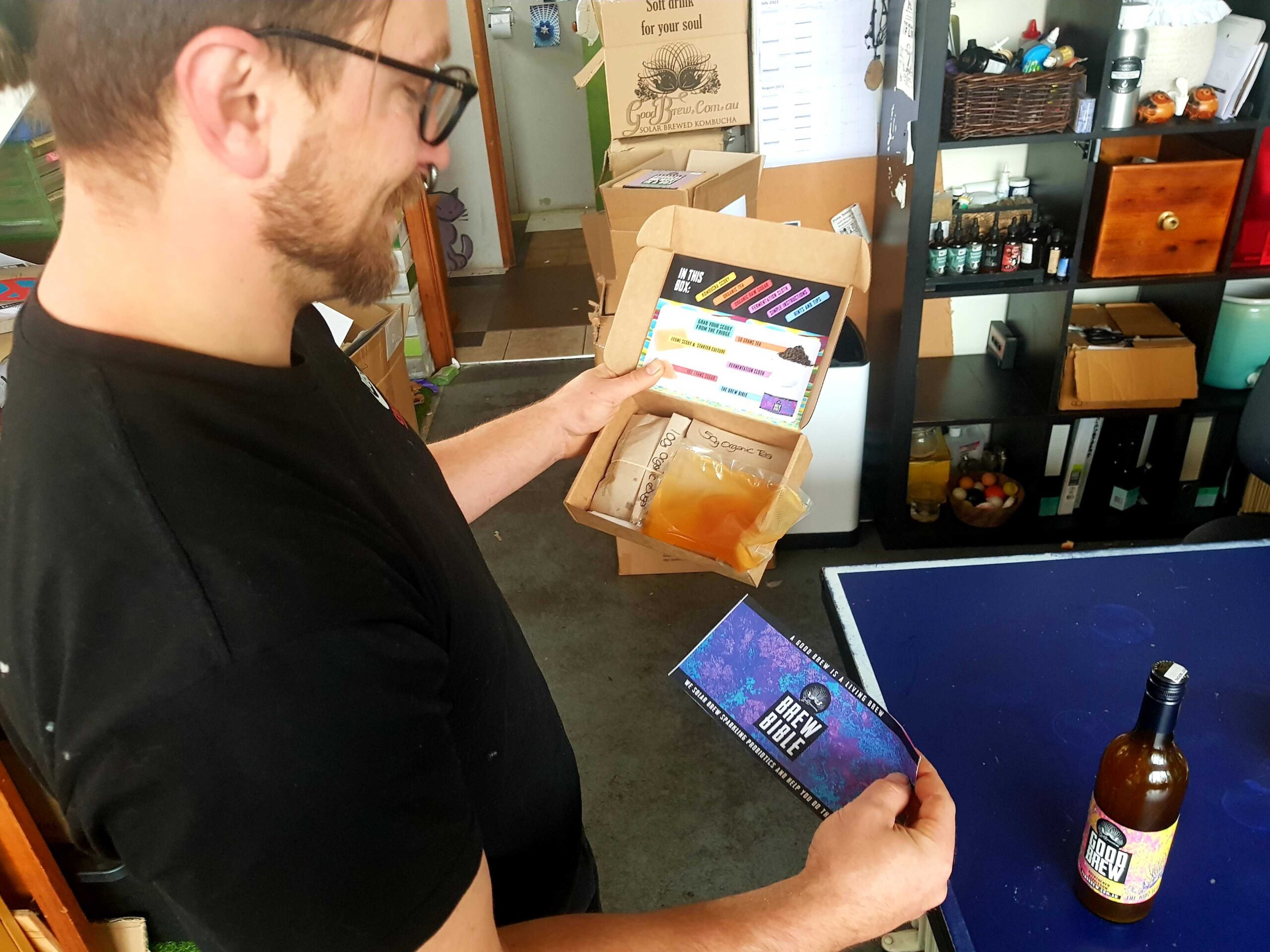
The kombucha market is now moving beyond “gut health” as its only calling card. Brewers are incorporating ingredients linked to broader wellness trends, such as adaptogenic herbs, prebiotic fibres and low-caffeine teas.
Emerging functional trends
Low-caffeine tea bases for gentle stimulation
Packaging under pressure
Sustainability remains central to kombucha’s appeal, but expectations are rising. Consumers are looking for proof that their drink’s environmental story holds up beyond marketing.
A 2025 report from the Australian Institute of Packaging found that beverage companies face growing pressure to eliminate single-use plastics by 2030. Kombucha producers, especially smaller ones, are ahead in adopting returnable glass bottles, aluminium cans, and keg-based refill systems for cafés.
Packaging comparison snapshot
| Packaging type | Environmental impact | Recycling rate (Australia) | Notes |
|---|---|---|---|
| Glass bottles | Low (reusable) | ~56% | Heavy but easily cleaned and reused |
| Aluminium cans | Medium | ~70% | Widely recyclable and lightweight |
| Plastic bottles (PET) | High | ~13% | Cheap but limited reuse potential |
| Kegs / refills | Very low | N/A | Ideal for cafés and local distribution |
In Victoria, Good Brew’s refill program in Brunswick remains one of the few where customers can return bottles directly for reuse. Sustainability researchers point to this kind of closed-loop model as one of the most effective ways to cut packaging waste in the beverage sector.
Small breweries such as Good Brew continue to show that local production, returnable bottles and community-based delivery systems can work at scale, provided customers have a convenient way to participate.
The science catches up
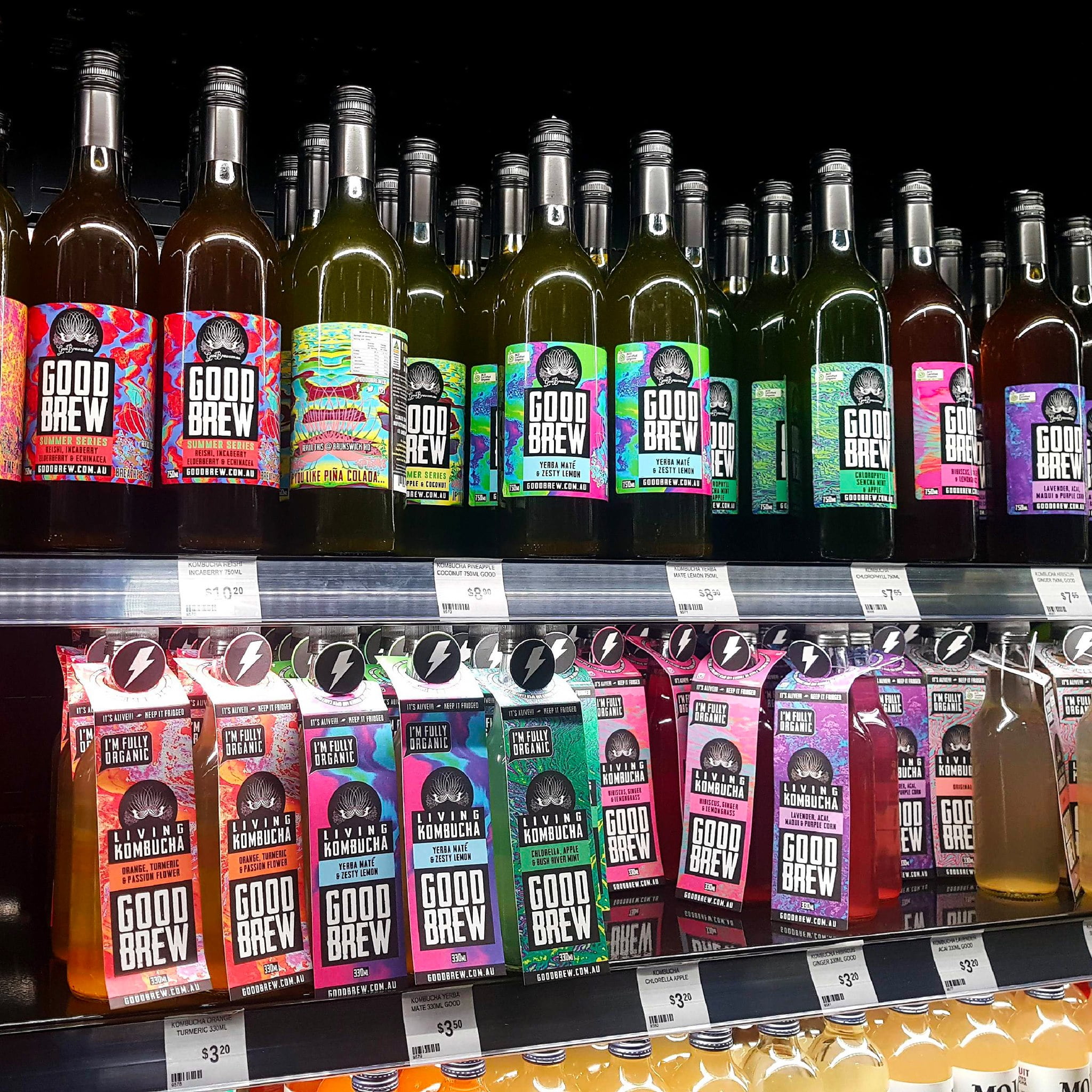
Scientific understanding of kombucha has grown quickly. A 2023 review in Frontiers in Microbiology identified more than 200 strains of bacteria and yeast that can inhabit a SCOBY, varying by region and recipe.
That variability explains why kombucha from one brewer can taste distinct from another. It also reinforces the idea that kombucha is a living product, complex, variable and shaped by its maker.
Current scientific consensus
Home brewing makes a comeback
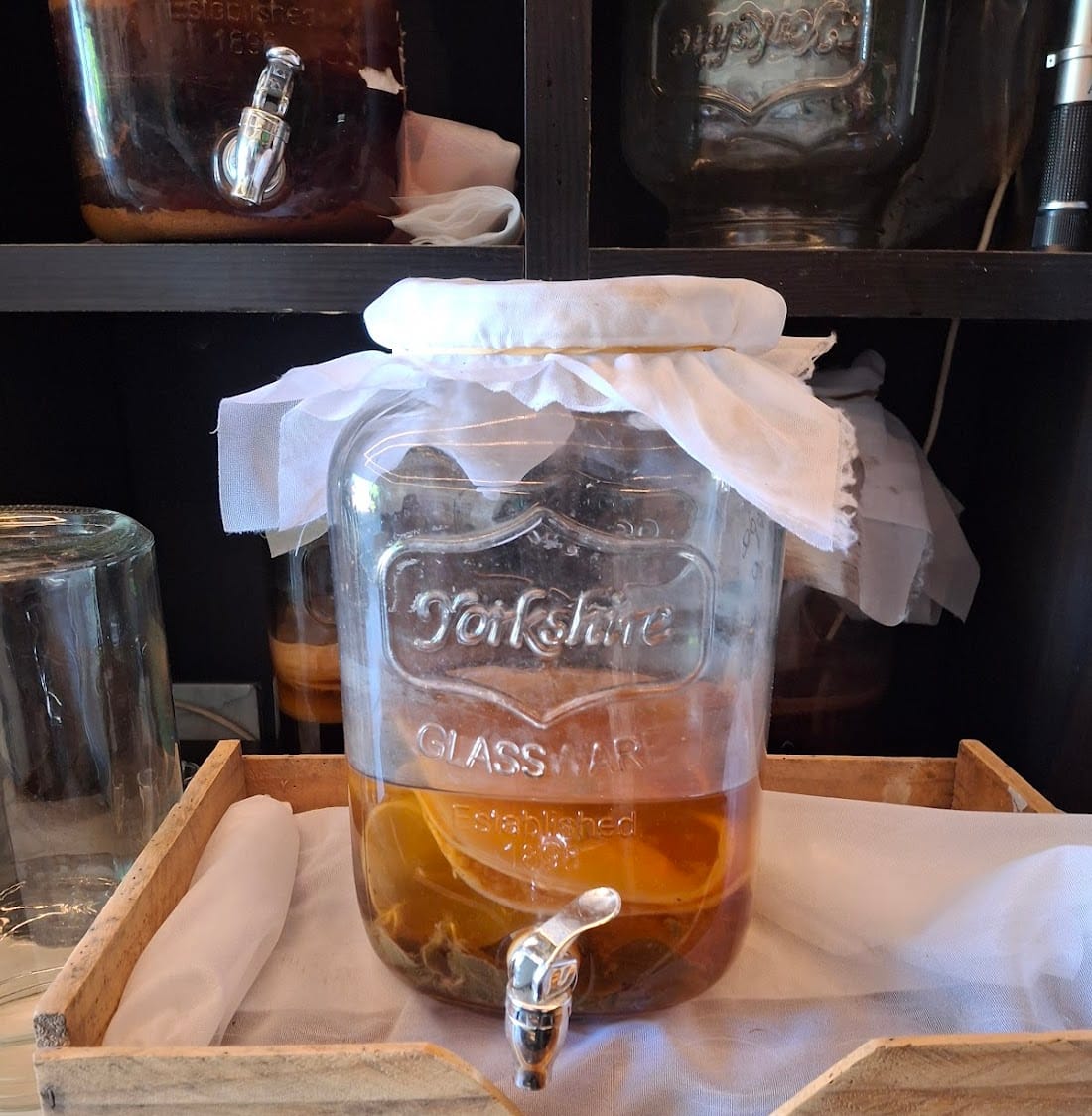
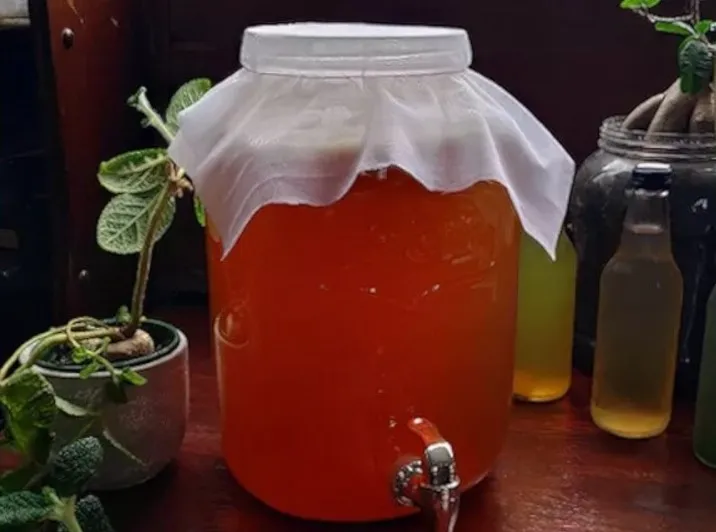
Across Australian kitchens and backyards, jars of tea and SCOBYs are fermenting again. Rising costs and a return to slower living have inspired more people to brew their own.
What’s driving the comeback
For most home brewers, it is less about cost than curiosity. Making kombucha connects them to the same principles that small producers like Good Brew have followed for years — real fermentation, minimal intervention and patience.
Many who start brewing at home say they begin to notice the difference between live kombucha and pasteurised versions. That awareness builds appreciation for quality and for brands that keep their product as natural as possible.
Beyond kombucha: the rise of living drinks
Kombucha has paved the way for other fermented beverages. Kefir, jun tea and water kefir are appearing in cafés and health-food stores, each offering a different expression of live culture fermentation.
Other living drinks joining the kombucha led trend:
Where it goes next
Australia’s kombucha story is now about refinement rather than novelty. As drinkers demand authenticity and transparency, producers are adjusting to meet them.
For Good Brew, the next phase is less about expansion and more about connection between product and place, maker and drinker.
Kombucha has become part of how Australians think about balance, sustainability and taste.