
 54 Hope St, Brunswick VIC 3056
 0406 154 886
 Email Us

Kombucha is not hard to find in Australia anymore. It sits in supermarket chillers beside the sparkling water and the cold-pressed juice. It turns up at cafés, farmers’ markets, online stores, and in the office fridge next to someone’s oat milk. The category has grown fast, and that growth has brought a predictable side effect: a lot of average product dressed up in very good packaging.
If you have ever stood in front of a shelf full of kombucha bottles and wondered which one is actually the best kombucha in Australia for your money, you are asking the right question. The answer has less to do with branding than most people expect, and more to do with a handful of practical things you can check before you buy.
The label is not the drink
Most kombucha marketing leans on the same handful of words. Raw. Organic. Living. Botanical. Functional. Small-batch. Some of those words carry real meaning. Others are decoration.
The trouble is that none of them tell you how the drink actually tastes, how it holds up over a second and third bottle, or whether the company behind it treats kombucha as a serious brewing product or a lifestyle prop.
A better starting point is to ignore the adjectives and ask yourself one question: what am I actually going to do with this bottle? The answer changes what “worth buying” means.
- Replacing soft drink in the afternoon? You want something clean, lightly tart, and easy to reach for daily.
- Taking it to a barbecue or dinner? A larger format bottle with a bit more character makes more sense.
- Trying kombucha for the first time? A mixed pack beats committing to a single flavour you might not love.
- Stocking the fridge for the household? Cases, subscriptions, or bulk options start to matter.
A kombucha that sounds impressive but sits half-finished in the fridge door is not good value. A simpler one you keep reordering usually is.
What a good kombucha range actually looks like
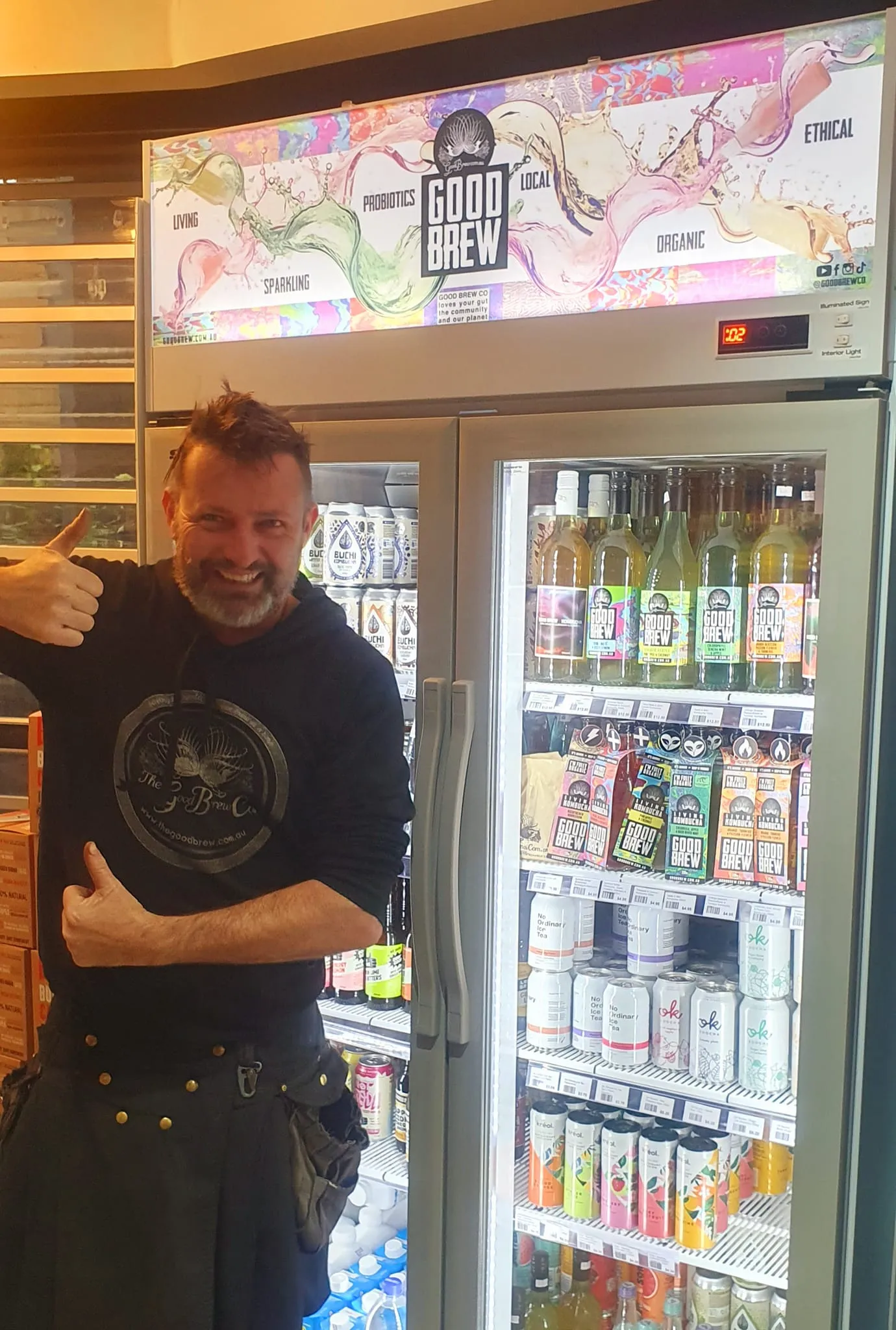
Variety is useful. Clutter is not. The difference between the two is whether a range feels deliberate or just wide.
A well-built kombucha lineup tends to cover a few distinct drinking styles: something clean and unflavoured for purists, something fruit-forward for easy drinking, and something more complex or botanical for the people who want to be challenged. That is enough to suit different palates and different occasions without turning the shop page into a wall of noise.
What matters more than the number of flavours is whether each one has a reason to exist. If half the range tastes like mild variations of the same thing, breadth is an illusion.
The things that actually separate good from average
Kombucha has a low barrier to entry as a product, which is part of why the market is so crowded. But the gap between a genuinely well-made bottle and a mass-produced one is real. Here is what tends to separate them.
Transparency about what is in the bottle. Good producers make it easy to understand the ingredients, the brewing approach, and whether the kombucha is pasteurised or still active. If the label or website is vague about any of this, treat it as a yellow flag.
Honest shipping and storage information. A living kombucha is a perishable product. If the seller does not mention cold chain, seasonal shipping limits, or storage instructions, they are either not selling a live product or not thinking carefully about what happens after checkout. Either way, it tells you something.
Supporting content that goes beyond marketing. The businesses that invest in explaining how kombucha works, what raw fermentation means, or what research exists around fermented drinks tend to be more serious about the product. That does not mean every buyer needs to read it. It means the knowledge is there if you want it.
A sensible approach to format and sizing. Not every occasion calls for the same bottle. A 330 ml serve suits a personal routine. A 750 ml bottle works better on a table. A case or subscription makes sense once you know what you like. If a brand only sells one format, they are thinking about shelf space, not about how people actually drink.
A quick way to compare before you buy
If you are weighing up a few options, this is a practical way to think about what matters:
| What to check | What it tells you |
|---|---|
| Ingredient transparency | Whether the producer is confident enough to show their work |
| Flavour range structure | Whether the lineup is deliberate or just large |
| Bottle size options | Whether the brand understands different drinking occasions |
| Shipping and storage notes | Whether the product is treated as a living drink or a shelf-stable commodity |
| Mixed packs or trial options | Whether the brand makes it easy for new buyers to explore without overcommitting |
| Educational content | Whether the business knows kombucha beyond its own product line |
None of these require specialist knowledge. They are just practical signals that separate a drinks business from a branding exercise.

“Organic” and “raw” are worth understanding, not just spotting
These two words appear on a lot of kombucha labels, and they are not meaningless. But they are only useful if you understand what they refer to.
Organic, in an Australian context, relates to the ingredients and how they were produced. It matters most for the tea and sugar that form the base of the brew. Raw typically means the kombucha has not been pasteurised, so the cultures and acids produced during fermentation are still active in the bottle.
The distinction matters because pasteurised kombucha and raw kombucha are genuinely different products. One is shelf-stable and milder. The other is alive, more complex in flavour, and needs to be stored and shipped with care. Neither is wrong, but you should know which one you are buying.
A producer worth buying from will explain this clearly rather than just using the word as a label claim.
Repeatability matters more than novelty
Here is where a lot of kombucha commentary loses the plot. It treats every new flavour launch like a restaurant review, as if the point is to be impressed once. For most buyers, the real question is simpler: will I want this again next week?
That is the difference between a drink that earns a permanent spot in the fridge and one that ends up as a single interesting experience. Cleverness fades. Drinkability does not.
This is also why mixed packs and subscription options are worth paying attention to. They are built around the assumption that people are looking for a regular drink, not a novelty. A business that makes it easy to reorder is usually one that believes its product holds up over time.
What to look for in an online kombucha shop
Buying kombucha online is now normal, but the experience varies wildly between sellers. Some sites are clean, informative, and structured around how people actually buy drinks. Others feel like wellness mood boards with a checkout bolted on.
A good online kombucha shop should make it easy to:
See what is in the range and how each product differs
Understand bottle sizes and pack options at a glance
Find out how the product is shipped and stored
Buy a small amount before committing to a larger order
Set up a subscription or repeat order if the product becomes a regular purchase
Tell the difference between ready-to-drink kombucha and home-brewing supplies, if the business sells both
The best bottle is the one you will actually drink again
There is no single best kombucha in Australia, because “best” depends on your palate, your habits, and what role the drink plays in your week. But there is a reliable way to find the one that is best for you.
Start with a producer who is transparent about their product. Look for a range that makes sense rather than just looking large. Pay attention to how the business handles shipping, storage, and format. Try a mixed pack before locking into a single flavour. And give more weight to how a bottle fits your real life than to how it looks on a shelf.
Kombucha that earns a place in the fridge is almost always more practical than glamorous. That is not a criticism. It is the whole point.