
 54 Hope St, Brunswick VIC 3056
 0406 154 886
 Email Us
Kombucha is fermented sweetened tea with a fizz that sits somewhere between cider and a tart soft drink. It has been brewed for hundreds of years across East Asia and Eastern Europe, and it is now a staple in Australian cafes, fridges, and home kitchens.
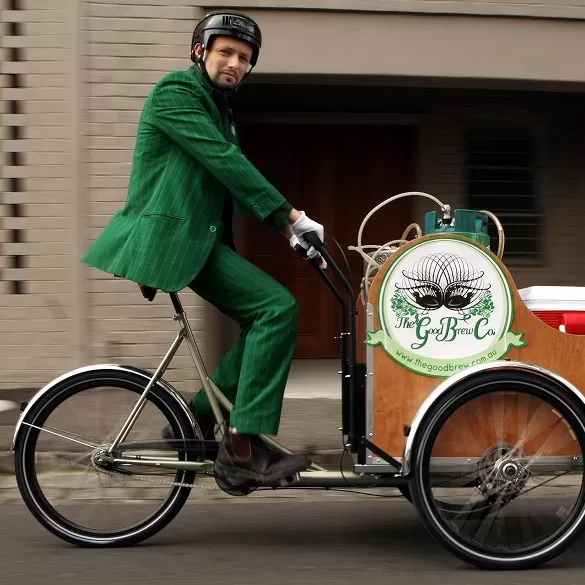
Good Brew has been making kombucha in Brunswick since 2007, when founder Deano started fermenting in jars at home. The same brewing approach now produces bottled kombucha, jun, water kefir, brewing kits, and SCOBYs for thousands of Australian homes and venues.
We are passionate about Kombucha because we want to spread the word: Kombucha is good for you!

Kombucha is fermented tea
What is Kombucha?
Put simply, Kombucha is a fermented drink made from sweetened tea and a live mixture called a SCOBY. SCOBY stands for symbiotic culture of bacteria and yeast.
Add a SCOBY to sweetened tea, leave it for a week or two, and the bacteria and yeast convert most of the sugar into organic acids, gases, and a small amount of alcohol.
The finished drink is tart, lightly sweet, and naturally carbonated. The taste of any batch depends on a few things:
- The tea used (black, green, or a blend)
- How long the brew sits before bottling
- The temperature it ferments at
- Anything added at the second ferment
A short brew is sweeter and milder. A longer brew is sharper, more vinegary, and lower in residual sugar. No two batches are exactly the same, which is true of any live fermented food. Sourdough, yoghurt, and miso all behave the same way.
What a SCOBY does
A SCOBY is the working part of every kombucha brew. The bacteria and yeast cultures inside it digest the sugar in the tea and produce the acids, gases, and trace compounds that turn sweet tea into kombucha.
A healthy SCOBY looks like a rubbery beige disc that floats on the surface of the brew. It grows with each batch, splitting into thinner layers that can be peeled apart and shared. People who brew at home often pass SCOBYs between friends, which is how home brewing spread across Australia long before bottled brands reached supermarket shelves.
If you want to brew at home, a healthy SCOBY is the first thing you need. Good Brew sells live SCOBYs and full brewing kits that include the culture, the jar, the sugar, the tea, and brewing instructions.
How kombucha is made
Kombucha is brewed in a few clear steps:
Brew strong sweetened tea (black, green, or a blend) and let it cool.
Pour the cooled tea into a fermentation jar with starter liquid from a previous batch.
Add the SCOBY and cover the jar with a breathable cloth.
Leave the brew at room temperature for around seven to fourteen days.
Taste it. When the balance of sweet and tart is right, bottle it.
Optional second ferment: add fruit, juice, ginger, or herbs to each bottle for flavour and natural fizz.
There are four base ingredients:
- Tea. Black, green, or a blend. Provides the tannins and nitrogen the culture feeds on.
- Water. Needs to be free of chlorine, which kills the culture.
- Sugar. The fuel for fermentation. The SCOBY eats most of it during the brew, which is why finished kombucha is much lower in sugar than the tea it started with.
- A live culture. A SCOBY plus starter liquid from a previous batch.
Good Brew uses organic teas and unrefined sugar across the bottled range. Each batch ferments at the Brunswick brewery and is bottled unpasteurised, so the live culture stays active in the bottle. For a closer look at the production side, see our About Our Kombucha page.
Is all kombucha the same?
No. Two bottles labelled “kombucha” can sit at opposite ends of the fermentation spectrum.
The biggest differences are:
- Live or pasteurised. Pasteurised kombucha is heated to extend shelf life and stabilise carbonation. Heat kills the live cultures, which means the drink is no longer fermenting in the bottle. Raw kombucha is unpasteurised and stays active. Both are legal, both are sold, and the difference matters most to people choosing kombucha for the live cultures.
- Sugar level. The longer the brew, the less sugar remains. Short-fermented kombucha can carry a lot of residual sugar from the original tea. Longer-fermented kombucha is drier.
- Carbonation method. Some bottled kombucha is naturally carbonated through a second ferment in the bottle. Other brands are force-carbonated after pasteurisation, like a soft drink.
- Ingredients. Tea quality, sugar source, water quality, and any added juices or flavourings all show up in the finished drink.
Good Brew bottles raw, unpasteurised, naturally carbonated kombucha. Each bottle keeps fermenting slowly in the fridge, which is why the carbonation builds over time and the flavour deepens as the bottle sits.
What does kombucha research tell us?
Kombucha research is still a young field. A few things to keep in mind when reading studies:
- Most published studies are small
- Many are run on cells in a dish or on animals rather than people
- Results vary widely with the brew, the dose, and the test conditions
- A finding from one specific kombucha does not automatically apply to every bottle on every shelf
That does not mean the research is worthless. It means it should be read carefully.
For a closer look at the research we have contributed to, including a university-linked study on Good Brew kombucha, see our Research page. The findings on that page should be read in context, and the page is written to do that clearly.
Kombucha is a fermented food and drink. It is not a medicine, and Good Brew does not sell it as one.
Should you buy kombucha or brew your own?
Both work. The right choice depends on how much time you want to spend, how much kombucha you drink, and how much you want to control the brewing.
| Option | Best for | What to know | Suggested next step |
|---|---|---|---|
| Bottled kombucha | People who drink kombucha occasionally or want consistent flavour without the brewing time | Ready to drink, no equipment, available by the bottle, six-pack, case, or subscription | Shop bottled kombucha |
| SCOBY starter | People who already have brewing equipment or want to start with the bare minimum | Includes a live SCOBY and starter liquid. You supply the jar, tea, sugar, and time | Buy a SCOBY starter |
| Kombucha brewing kit | People who want everything in one box to brew at home from scratch | Includes the culture, fermenter, sugar, tea, instructions, and bottles | Browse brewing kits |
| Monthly brewing workshop | People who want to learn in person before brewing at home | Held at the Brunswick brewery. Take home a SCOBY and the confidence to use it | See upcoming workshops |
For most people, the easiest start is a six-pack of bottled kombucha to find the flavours you like, followed by a brewing kit if you want to try making it yourself.
Try Good Brew kombucha from Brunswick
Good Brew bottles fresh kombucha at the Brunswick brewery every week. We also sell live SCOBYs, brewing kits, fermenters, and flavouring supplies, run monthly workshops, and serve from a tap room on site.
Three ways to start:
- Drink it. Browse bottled kombucha by the bottle, six-pack, case, or monthly subscription. Subscriptions get a small discount and skip the reorder admin.
- Brew it. Start with a SCOBY, a full brewing kit, or a workshop spot, depending on how much you want included.
- Visit. Drop into the Brunswick tap room to taste what is on at the moment, or get in touch through the website if you want to talk to someone before buying.
GOT QUESTIONS?
If you have any questions regarding brewing your own booch, stocking your store or ordering it straight to your door, contact us now to speak with our friendly team of experts.