
 54 Hope St, Brunswick VIC 3056
 0406 154 886
 Email Us


Do not assume kombucha is gluten free because it starts with tea. Added ingredients and cross-contact can affect the finished drink. Check the exact product’s ingredient list, allergen declaration and any gluten free claim. Australian rules treat those declarations and claims differently; neither a general recipe nor missing wording proves a bottle’s gluten status.
Is plain kombucha gluten free?
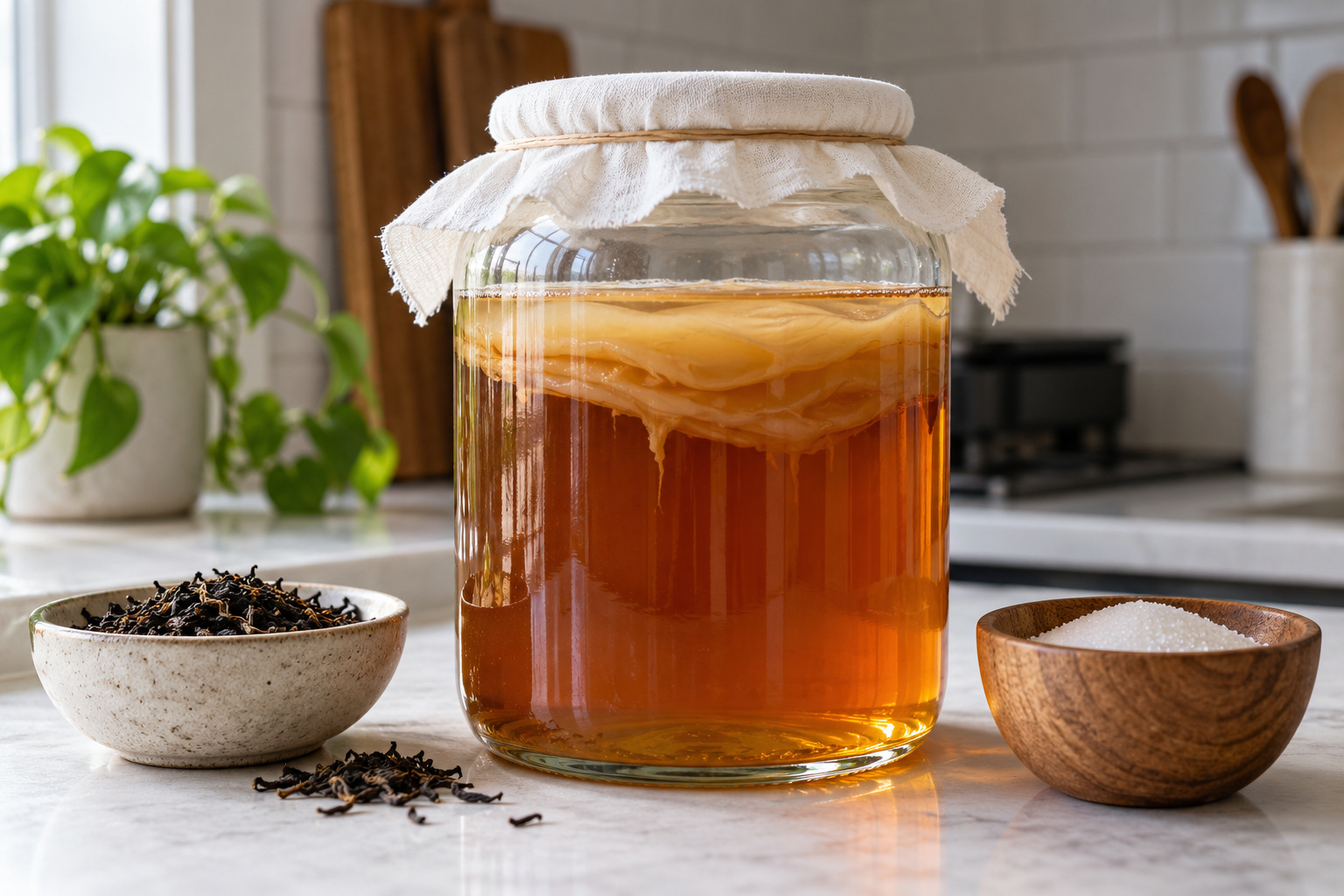
Kombucha starts with sweetened tea and a culture. A producer may add other ingredients, and the finished drink can also come into contact with gluten during manufacture. A base recipe alone cannot establish whether a particular kombucha is gluten free.
Our guide to kombucha ingredients explains the starting recipe. For gluten information, read the bottle’s ingredient list, allergen declaration and any gluten claim alongside the producer’s current product information.
How could gluten get into a kombucha?
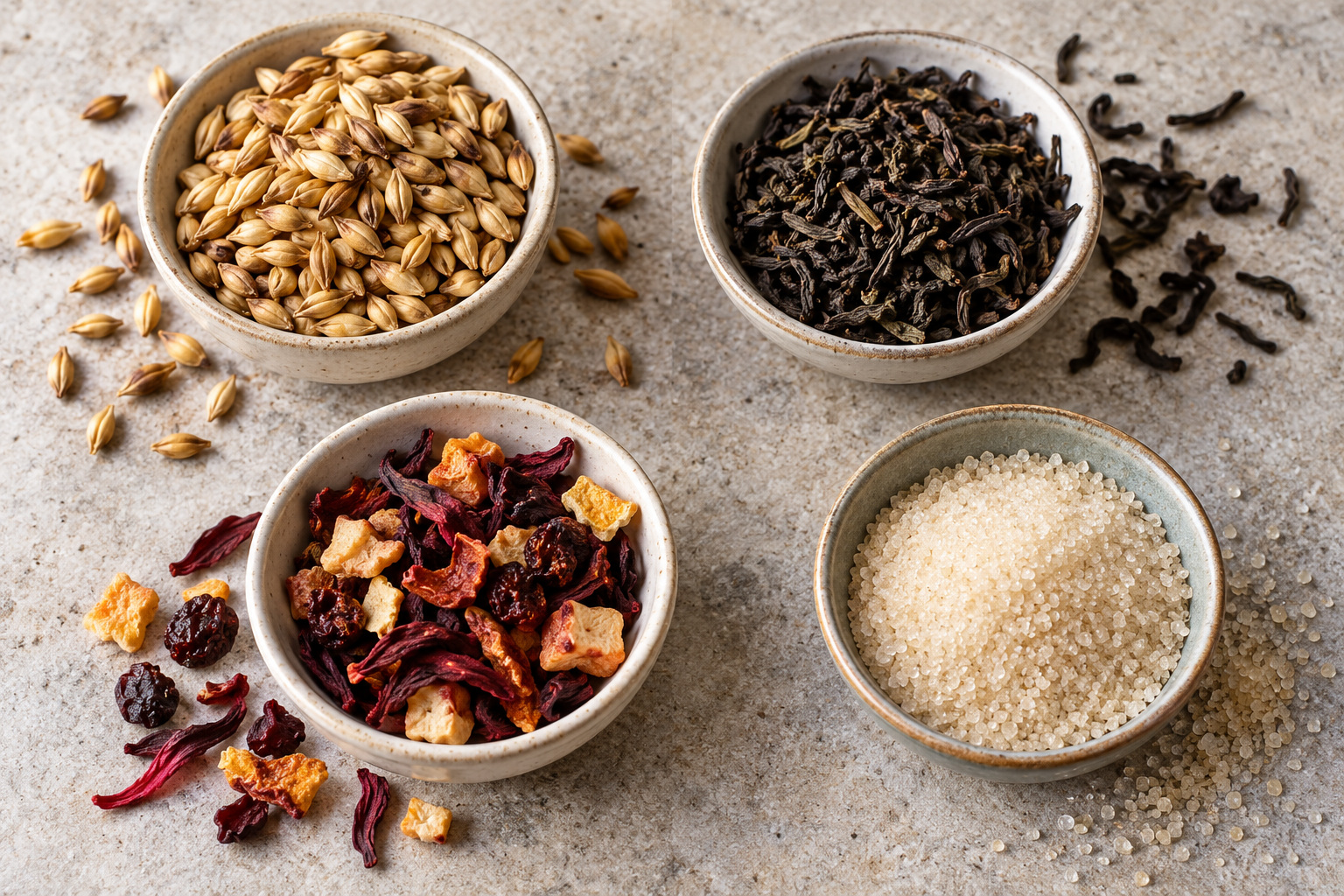
The Australia New Zealand Food Standards Code defines gluten in relation to proteins in wheat, rye, oats, barley, triticale and spelt. Gluten-containing ingredients and cross-contact are possible routes into a food.
Examples include:
- A malted cereal containing gluten, or an ingredient made from it.
- An added flavouring or other ingredient that contains gluten.
- Contact with gluten-containing food through shared equipment or a shared facility. This is called cross-contact.
These are possibilities, not findings about a particular producer or evidence that they are common.
A powder sold as kombucha has its own ingredients. Our page on kombucha formats covers that distinction. Do not transfer a bottled drink’s gluten information to a different type of product.
Where is gluten information on an Australian drink label?

Where an allergen declaration is required on a packaged drink with an ingredient list, look in two places:
Standard 1.2.3 and Schedule 9 of the Code set these rules. They cover relevant ingredients, food additives and processing aids, with specific exemptions. The summary starts with Contains and lists only the required names.
- Bold required names within the ingredient list.
- A separate bold Contains statement directly beside the list, in the same field of view.
Wheat must be declared whether or not it contains gluten, subject to the exemptions. The summary must name wheat and, if gluten is present, gluten too. For barley, oats and rye containing gluten, the ingredient list names the cereal and the summary names gluten.
Food Standards Australia New Zealand explains the same layout for shoppers. The word gluten does not replace a required wheat declaration.
Some wheat-derived ingredients are exempt from declaring wheat. Examples include particular refined wheat-starch glucose syrups and alcohol distilled from wheat. A missing wheat declaration does not rule out every wheat-derived ingredient. These exemptions do not relax the separate gluten free claim conditions.
What does a gluten free claim mean in Australia?

A gluten free claim must meet the Food Standards Code’s conditions. Schedule 4 says the food must contain none of the following:
All three conditions apply. FSANZ confirms that exemptions from declaring wheat do not change them.
- Detectable gluten.
- Oats or oat products.
- Cereals containing gluten that have been malted, or products of those cereals.
Coeliac Australia recommends product testing to confirm a gluten free claim. The claim itself is not a laboratory certificate.
Under Standard 1.2.7, permitted claims include gluten free and low gluten, their synonyms, and statements that a food contains gluten or is high in gluten. Coeliac Australia identifies no added gluten, gluten friendly and gluten removed as wording that is not permitted. It also says the separate low gluten descriptor does not suit people with coeliac disease.
The distinction is useful when comparing product information:
| Information | What it tells you |
|---|---|
| Base recipe | Describes starting ingredients, not the finished product’s gluten status |
| Allergen declaration | Names relevant foods or allergens under the declaration rules and exemptions |
| Gluten free claim | States that the product meets the Code’s gluten free conditions |
Organic and raw wording do not answer the gluten question. Our article on organic kombucha certification explains that separate label.
Does a missing gluten free claim mean gluten is present?

No. A producer’s decision not to make a gluten free claim proves neither presence nor absence of gluten. It also tells you nothing about whether testing took place or what a test found.
Coeliac Australia says products at genuine risk of gluten cross-contact should not be labelled gluten free. That does not establish the conditions at any particular producer’s premises. The organisation explains that allergen management can allow products made on shared equipment to meet the claim requirements.
Use the information available for the actual product. If it leaves an essential question unanswered, seek clarification rather than treating silence as a result.
Is a may contain statement the same as Contains?

No. A required Contains statement declares relevant foods or allergens under the Code. A may contain statement warns of possible unintended presence during manufacture.
FSANZ says may contain and may be present statements are voluntary and are not regulated by the Food Standards Code. That does not make a warning safe to ignore. Nor does a missing warning prove there was no cross-contact.
Coeliac Australia advises that a gluten free claim should not appear alongside a warning of possible gluten cross-contact. Neither kind of wording supplies individual medical advice.
Find the exact flavour and pack in the Good Brew kombucha range, then compare its current information with the bottle’s ingredients, Contains line and any gluten claim. Ask about that product if a question remains. Take individual dietary-suitability questions to a qualified health professional.
Frequently asked questions
Are wheat free and gluten free the same thing?
No. Barley and rye can also contain gluten. Wheat-free wording does not answer the wider gluten question.
Does organic or raw kombucha mean it is gluten free?
No. Those words describe other features of a product. They do not establish whether the finished drink meets the gluten free conditions.
Does a missing gluten free claim mean the producer never tested?
No. A producer may choose not to make the claim. Missing wording tells you neither whether testing occurred nor what any test found.
Does the word kombucha on a powder make it the same as a bottled drink?
No. A powder can have different ingredients from a bottled drink. Read the pack you are considering rather than borrowing another product’s gluten information.